FO claims India is misrepresenting Trump’s N-statements.
India’s attempt to connect accusations on Islamabad’s nuclear record with US President Donald Trump’s recent remarks on nuclear testing was rebuffed by Pakistan on Friday, which accused New Delhi of “distorting facts” and launching a “malicious disinformation campaign.”
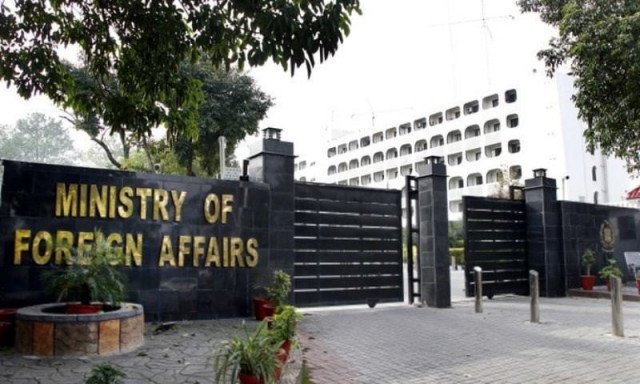
Pakistan’s Ministry of Foreign Affairs released a comprehensive statement in response to a media inquiry asking for its assessment on India’s response to President Trump’s comments and whether Islamabad intended to bring up the issue with Washington.
“India is blatantly falsifying information and misrepresenting US President Donald Trump’s statements. Regarding the President’s remarks, the US side has previously made its stance clear to the media,” the official stated.
The spokesperson clarified Pakistan’s position, stating that Islamabad’s last nuclear tests were carried out in May 1998 and that the country’s views on nuclear testing are still stable and well-established.
“Pakistan has been supporting United Nations General Assembly resolutions calling for a comprehensive ban on nuclear testing,” the statement stated.
“In contrast, India’s abstentions on these resolutions reflect its ambiguous and questionable intentions on future nuclear testing,” it stated.
The Foreign Office emphasized that Pakistan has a strong command and control system in place for its nuclear program, complete export controls, and a flawless record of adhering to the global non-proliferation framework.
“Allegations of ‘clandestine or illegal nuclear activities’ are baseless, malicious, and part of India’s disinformation campaign aimed at diverting attention from its own irresponsible conduct,” said the statement.
The spokesperson also voiced serious concerns about India’s nuclear safety and security record, citing multiple instances of sensitive nuclear material being stolen and illegally trafficked over the previous few decades.
“As recently as last year, radioactive equipment from the Bhabha Atomic Research Centre (BARC), along with the highly radioactive substance Californium — valued at over USD 100 million — was found on sale in India,” stated a spokeswoman.
Pakistan cautioned that such frequent occurrences point to the possibility of a “thriving nuclear black market” for dual-use and sensitive items in India.
“The international community must take serious note of these alarming gaps, which pose a grave threat to both regional and global security,” the statement said.India’s attempt to connect accusations on Islamabad’s nuclear record with US President Donald Trump’s recent remarks on nuclear testing was rebuffed by Pakistan on Friday, which accused New Delhi of “distorting facts” and launching a “malicious disinformation campaign.”
Pakistan’s Ministry of Foreign Affairs released a comprehensive statement in response to a media inquiry asking for its assessment on India’s response to President Trump’s comments and whether Islamabad intended to bring up the issue with Washington.
“India is blatantly falsifying information and misrepresenting US President Donald Trump’s statements. Regarding the President’s remarks, the US side has previously made its stance clear to the media,” the official stated.
The spokesperson clarified Pakistan’s position, stating that Islamabad’s last nuclear tests were carried out in May 1998 and that the country’s views on nuclear testing are still stable and well-established.
“Pakistan has been supporting United Nations General Assembly resolutions calling for a comprehensive ban on nuclear testing,” the statement stated.
“In contrast, India’s abstentions on these resolutions reflect its ambiguous and questionable intentions on future nuclear testing,” it stated.
The Foreign Office emphasized that Pakistan has a strong command and control system in place for its nuclear program, complete export controls, and a flawless record of adhering to the global non-proliferation framework.
“Allegations of ‘clandestine or illegal nuclear activities’ are baseless, malicious, and part of India’s disinformation campaign aimed at diverting attention from its own irresponsible conduct,” said the statement.
The spokesperson also voiced serious concerns about India’s nuclear safety and security record, citing multiple instances of sensitive nuclear material being stolen and illegally trafficked over the previous few decades.
“As recently as last year, radioactive equipment from the Bhabha Atomic Research Centre (BARC), along with the highly radioactive substance Californium — valued at over USD 100 million — was found on sale in India,” stated a spokeswoman.
Pakistan cautioned that such frequent occurrences point to the possibility of a “thriving nuclear black market” for dual-use and sensitive items in India.
“The international community must take serious note of these alarming gaps, which pose a grave threat to both regional and global security,” the statement said.