The Senate was told that Pakistan wants to talk to Afghanistan.
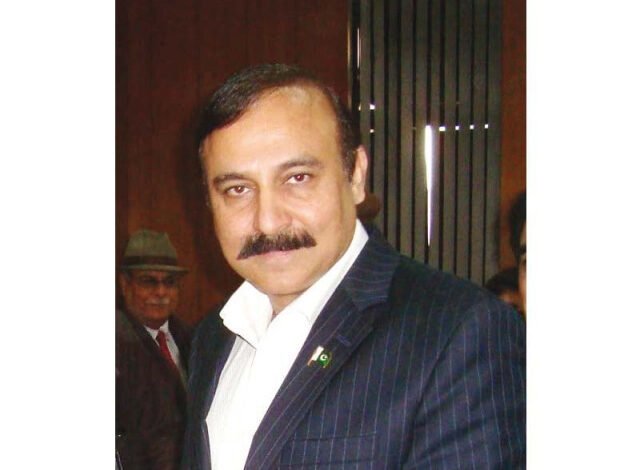
Dr. Tariq Fazal Chaudhry, the Federal Minister for Parliamentary Affairs, told the Senate on Saturday that Pakistan is still committed to solving all of its problems with Afghanistan through talks.
He did say, though, that the talks between Pakistan and Afghanistan have been put on hold because the Afghan side hasn’t given any written guarantees.
In response to questions from Mashal Azam in the Senate, he said that the government fully supported the peace talks between Pakistan and Afghanistan that were going on at the time. He said, “This government has always believed that all problems with Afghanistan must be solved through negotiations.”
He did say, though, that the talks were at a standstill because the Taliban regime had verbally acknowledged the existence of TTP safe havens but had not given written guarantees.
Chaudhry said that Pakistan would keep using diplomatic means to bring about lasting peace and stability in the area.
The Taliban government said on Saturday that its ceasefire with Pakistan would stay in place even though their most recent talks failed. The two sides met in Turkey on Thursday to finalize a cease-fire that had been agreed upon on October 19 in Qatar after deadly fighting between the two South Asian neighbors.
Both sides have kept quiet about what was said during the talks, which are only known to have been about long-standing security problems.
Mujahid said at a news conference later that the ceasefire “will hold.” He said, “There is no problem with the ceasefire we agreed on with Pakistan; it will hold.” Neither Islamabad nor the mediators said anything right away about the news that the talks had failed.
Before, Information Minister Attaullah Tarar had hinted that talks in Turkey were going nowhere. He said that it was up to Afghanistan to keep its promises to fight terrorism, “which they have not done so far.” He wrote, “Pakistan will continue to use all options necessary to protect the safety of its people and its sovereignty.”
He said that the Supreme Court of Pakistan later ruled that a convicted person could not issue party tickets, which led to the cancellation of those nominations and the election of candidates as independent members. This was based on a 2018 case in which Nawaz Sharif, as President of the Pakistan Muslim League-Nawaz (PML-N), signed Senate election tickets.
He said that saying that constitutional changes could only be made with the permission of a convicted person was therefore misleading and undemocratic. He said, “Only parliament, which is made up of the Senate and the National Assembly, has the power to change the Constitution.