According to the UNSC, the banned Pakistani group TTP poses a “serious threat” and is backed by Afghan authorities.
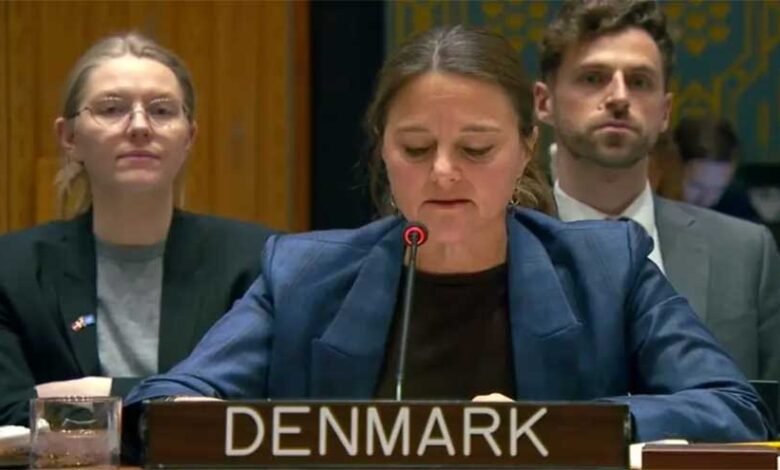
Denmark’s Deputy Permanent Representative Sandra Jensen Landi has branded the proscribed Tehreek-e-Taliban Pakistan (TTP) a major threat in Central and South Asia and added that it has been receiving backing from the regime.
In a report to the UN Security Council meeting held here on Wednesday, Denmark emphasised these concerns as head of the Security Council’s ISIL (Daesh) and Al-Qaeda Sanctions Committee.
Tensions between Pakistan and Afghanistan’s Taliban leadership have remained over the presence of TTP terrorists on Afghan soil. Since the Taliban’s takeover in 2021, Islamabad has accused them of sheltering thousands of TTP fighters who have stepped up attacks in Khyber Pakhtunkhwa and Balochistan.
Landi said that the TTP — estimated to have roughly 6,000 fighters — posed a severe regional threat and benefits from “logistical and substantial support” from Afghanistan’s de facto leadership. She emphasised that the group has carried out multiple high-profile strikes in Pakistan from Afghan territory, many resulting in large casualties.
She also presented the latest assessment of global terrorist networks, stating that ISIL (Daesh), Al-Qaeda and their affiliates remain active and geographically dispersed, with the highest intensity of attacks now seen in Africa. She claimed that these organisations are making it more difficult to enforce sanctions by spreading their propaganda on social media and using cryptocurrencies more frequently.
She noted ISIL’s push toward Africa and labelled ISIL-Khorasan as one of the most significant dangers in Central and South Asia, with roughly 2,000 fighters targeting Shia populations, Afghan authorities and foreign nationals.
According to Landi, foreign fighter movements remain a problem, while Al-Qaeda’s central leadership is weakened but its affiliates — particularly in the Sahel — continue to exploit local instability. In light of the 1267 sanctions regime, she emphasised the necessity of robust multilateral cooperation.
Pakistan’s Jadoon asks for tackling root cause of terrorism
Pakistan’s Deputy Permanent Representative Usman Jadoon, addressing following Landi, said the global terrorism scene is moving amid fast technological change, while the core reasons of terrorism remain unsolved. He recognised Pakistan’s significant sacrifices in counterterrorism efforts, including more than 80,000 casualties and major economic losses, and claimed Al-Qaeda was mostly dissolved owing to Pakistan’s activities.
Jadoon stated groups such as ISIL-K, the TTP, BLA and the Majeed Brigade are thriving in Afghanistan with external help. He called for listings to be treated impartially and without political bias, and that the 1267 system reflect contemporary circumstances. He went on to say that the UN’s counterterrorism framework must also be able to identify violent far-right, ultranationalist, and Islamophobic organisations.