To reduce losses in the power sector, the government is considering switching rooftop solar to net billing.
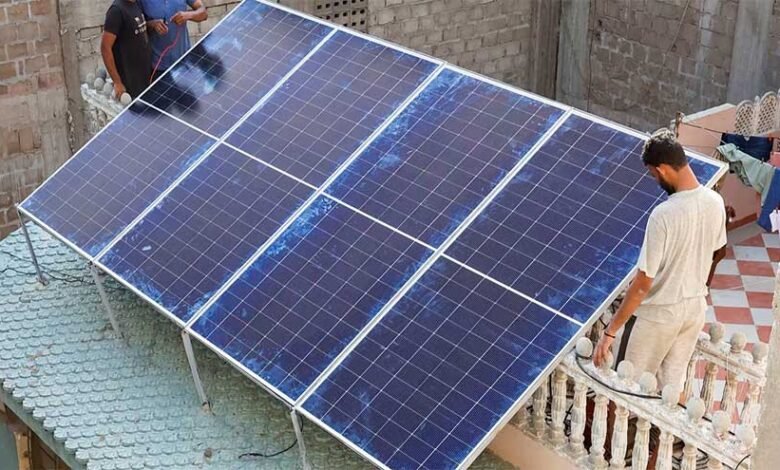
In an effort to lessen the financial burden on the faltering power industry, the government is thinking of replacing its net metering policy for rooftop solar with a net billing system for solar consumers nationwide, an official stated on Wednesday.
power produced by rooftop solar systems and exported to the national grid by consumers will be purchased at a rate 60% less than the previous power price under the proposed net billing system framework. However, consumers will still purchase electricity at the current commercial rates from the national grid.
In contrast, power users can directly offset exported units against imported electricity at the same price through net metering.
According to government authorities, the policy reform aims to alleviate the increasing financial strain on Pakistan’s electricity sector, where distribution companies’ profits have decreased due to the fast adoption of solar power, despite the fact that fixed capacity payments to power producers have continued to rise.
An official from the National Electric Power Regulatory Authority (NEPRA), who was not authorized to speak to the media, told Arab News on condition of anonymity that “net billing will apply to both old and new customers who will have to pay full commercial tariffs for all imported units” under the proposed regulations.
He did, however, clarify that the new regulations will take effect following a public hearing and NEPRA gathering input from interested parties.
According to the government’s proposal, which can be found on the NEPRA website, current customers would continue to get the higher PPP rates until the end of their seven-year contracts, while new solar customers would receive the reduced average energy price.
Sardar Awais Leghari, Pakistan’s Energy Minister, told Arab News that the government would make its case at the public hearing on NEPRA, which is scheduled for next month.
“Contractual obligations will be fulfilled for existing consumers while new consumers will receive energy rates for their produced units as per NEPRA’s proposal,” Leghari stated, noting that at least a month of consultations would take place.
Leghari responded, “Only if the regulator approves,” when asked if the regulation might be changed.
Consumers, energy experts, and industry players have expressed serious concerns about the government’s proposal, warning that it may hinder the development of renewable energy as Pakistan grapples with climate vulnerability, rising fuel import costs, and growing circular debt in the power sector.