Without the woman’s assent, the court cannot turn a divorce plea into a khula: SC
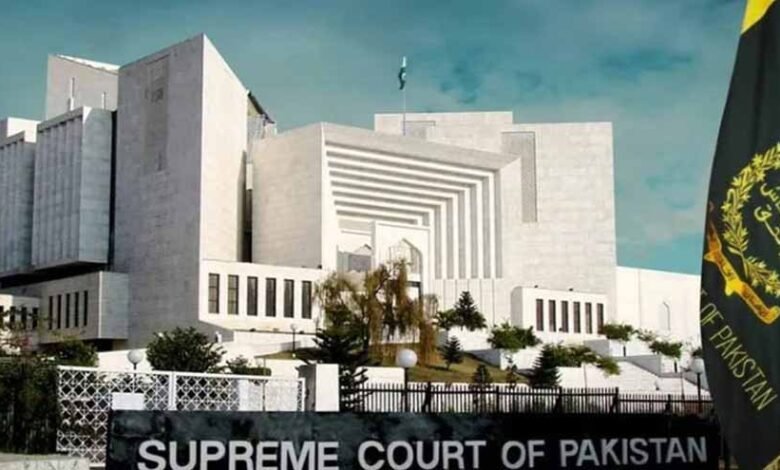
By holding that a court cannot turn a woman’s divorce petition into khula without her express and unambiguous permission, the Supreme Court established a fundamental legal norm.
Chief Justice Yahya Afridi concurred with Justice Musarrat Hilali’s five-page ruling. According to a two-member bench, courts lack the power to arbitrarily convert a divorce petition into a khula case. The Supreme Court ordered the respondent to give the petitioner, Naila Javed, Rs1.2 million as dower (haq mehr), overturning the rulings of the Family Court and the Peshawar High Court.
The ruling stated that Naila Javed had filed a petition to dissolve the marriage due to cruelty and other legal grounds. Nevertheless, the Family Court dissolved the marriage on the grounds of khula and ordered the wife to forfeit her dower sum, even though she had not requested khula, rather than ruling on claims of cruelty.
The Supreme Court decided that a divorce suit cannot be transformed into khula without a woman’s express assent. The ruling further stated that the husband entered into a second marriage in breach of Section 6 of the Muslim Family Laws Ordinance while the case was pending, acknowledging that he did not ask the Arbitration Council for authorization or approval.
The court also noted that attempts were made to defame the wife’s character during cross-examination and that the husband neglected to pay her support. According to the ruling, these elements legally qualify as cruelty. The court decided that a woman’s reluctance to reside with her husband in these situations cannot be considered disobedience.