Iran reports advancements in discussions with the United States despite concerns over potential attacks.
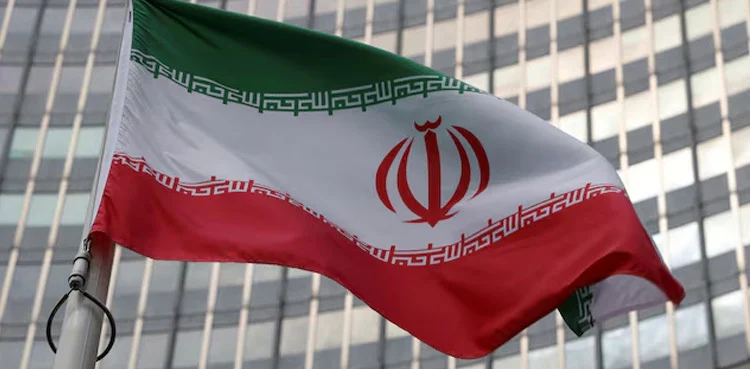
On Saturday, Iran’s foremost security official announced advancements in conversations with the United States, while the chief of the Islamic Republic’s army cautioned Washington against initiating military action.
US President Donald Trump acknowledged that discussions were occurring between the two parties, but maintaining the imminent threat of an attack as a focal point.
Washington has dispatched warships, spearheaded by the USS Abraham Lincoln aircraft carrier, to the vicinity of Iran following Trump’s threats of intervention in response to Tehran’s lethal suppression of anti-government demonstrations.
“In contrast to the exaggerated media narrative, the structural frameworks for negotiations are advancing,” stated Ali Larijani, chairman of Iran’s Supreme National Security Council.
He said one day subsequent to the Kremlin’s announcement that he had engaged in discussions with Russian President Vladimir Putin in Moscow.
Iranian President Masoud Pezeshkian stated on Saturday that an expanded conflict would be detrimental to both Iran and the United States.
The Islamic Republic of Iran has neither pursued nor intends to pursue war, strongly believing that such a conflict would not benefit Iran, the United States, or the region, as said in a conversation with Egyptian counterpart Abdel Fattah al-Sisi, according to the Iranian presidency.
On Saturday, Trump affirmed that a conversation occurred between Washington and Tehran.
“Iran is communicating with us, and we will assess the possibility of an agreement; otherwise, we will observe the ensuing developments… we have a substantial fleet en route,” he stated to Fox News.
“They are in negotiations,” he added.
The foreign ministry of Qatar announced that its Prime Minister Sheikh Mohammed bin Abdulrahman Al Thani, who concurrently holds the position of foreign minister, engaged in discussions with Larijani in Tehran on Saturday to seek to “de-escalate tensions in the region.”
- Anxieties over conflict –
The arrival of the US flotilla has heightened concerns of a direct confrontation with Iran, which has cautioned that it will retaliate with missile strikes on US bases, vessels, and allies—particularly Israel—should an attack occur.
Trump has expressed his belief that Iran will negotiate on its nuclear and missile programs to avoid US military intervention.
Tehran has expressed its willingness to engage in nuclear negotiations, provided that discussions regarding its missile and defense capabilities are excluded from the agenda.
Iranian army leader Amir Hatami has cautioned the United States and Israel against any aggression, asserting that his forces are “at full defensive and military readiness.”
“Should the adversary err, it will undoubtedly jeopardize its own security, the security of the region, and the security of the Zionist regime,” Hatami stated, as quoted by the official news agency IRNA.
The nuclear technology and experience of Iran “cannot be eradicated,” he stated.
In light of escalating tensions, Iranian officials hastily refuted any connection between various incidents on Saturday and potential attacks or sabotage.
An explosion occurred in the southern Iranian port city of Bandar Abbas, attributed to a gas leak, according to local firefighters.
On Friday, US Central Command (CENTCOM) said that Iran’s Revolutionary Guard Corps (IRGC) would undertake “a two-day live-fire naval exercise” in the Strait of Hormuz, a critical transit point for world energy supplies.
CENTCOM cautioned the IRGC on “any hazardous and unprofessional conduct in proximity to US forces,” eliciting a vehement reaction from Iran’s Foreign Minister Abbas Araghchi.
“The US military is currently endeavoring to prescribe the methods by which our formidable Armed Forces should execute target practice on their own territory,” he stated on X.
In 2019, the United States classified the IRGC as a terrorist organization, a decision that the European Union mirrored on Thursday, eliciting vehement responses from Tehran.
In June, the United States executed strikes on critical Iranian nuclear facilities while temporarily participating in Israel’s 12-day conflict against its regional adversary.
Nationwide protests against the escalating expense of living commenced on December 28, then evolving into a more extensive anti-government movement that culminated on January 8 and 9, which authorities labeled as “riots” attributed to the United States and Israel.