Pakistan is still worried about terrorist organizations operating in Afghanistan: Asim Iftikhar
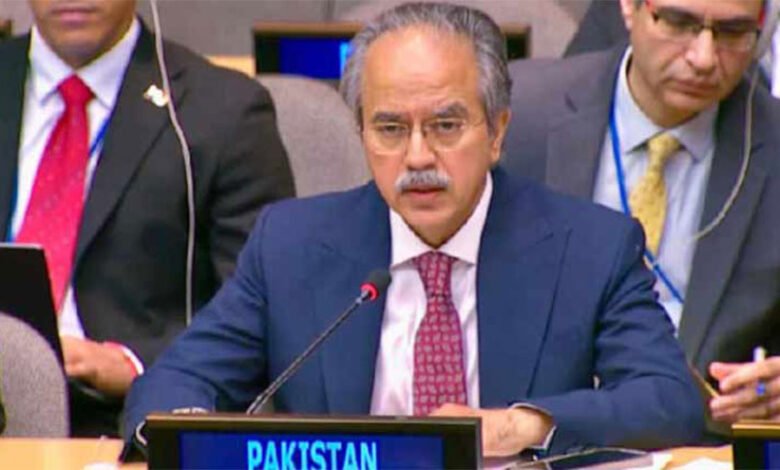
The existence of terrorist organizations in Afghanistan continues to be a major concern for Pakistan, according to Ambassador Asim Iftikhar Ahmad, Pakistan’s Permanent Representative to the UN, who made this statement on Thursday.
According to Asim Iftikhar, who was speaking to the UN Security Council, these organizations include the TTP, BLA, Majeed Brigade, ISIL-K, and Al Qaeda. He also mentioned that these groups have been accountable for some of the most horrific terrorist assaults against Pakistan and hostage-taking situations.
In just one month, they have killed 80 innocent people in Pakistani terrorist assaults, Ambassador Asim informed the Security Council.
“We urge the Taliban to stop terrorist organizations from committing such crimes without consequence and to successfully fight terrorism by keeping their counterterrorism pledges through consistent and verifiable actions in the interest of long-term peace and security.”
Noting that the text also highlights the numerous issues plaguing the Afghan people, such as drug trafficking, humanitarian problems, and the human rights crisis facing Afghan women and girls, he praised the Council’s unambiguous message to the Taliban through today’s adoption.
The Pakistani envoy went on to say, “It is for the Taliban to decide what path they wish to choose for Afghanistan — whether it is the path to isolation or the path to peace and prosperity as a responsible member of the international community.” The envoy urged the Taliban to address these issues immediately and change course.
The resolution also extended the mandate of the monitoring team tasked with supporting the Afghanistan Sanctions Committee, which was initially created in resolution 1988 (2011), for an additional 12 months after it expired this month.
The Council gave the monitoring team many assignments, including to collect data on cases of sanctions non-compliance, notify the Committee of such occurrences, and suggest ways to address non-compliance.
A year ago, the UN Security Council extended the mandate of the team responsible for overseeing sanctions on the Taliban and its affiliated organizations and people for an additional year.
In accordance with Chapter VII of the UN Charter, the 15-member Council unanimously adopted resolution 2816 (2026), which states that all States will continue to impose the penalties outlined in resolution 2255 (2015). The Taliban and associated “individuals, groups, undertakings and entities” that jeopardize the peace, stability, and security of Afghanistan are subject to those restrictions.