Pakistan fears that peacekeeping is being undermined by the UN’s liquidity crises.
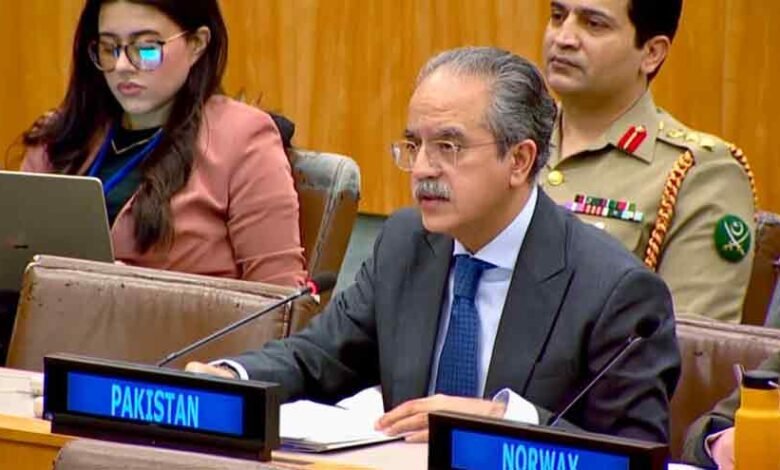
With major ramifications for mandate delivery, civilian protection, violence deterrence, and peacekeeper safety and security, Pakistan has warned that the UN liquidity crisis is directly undermining peacekeeping operations by lowering patrols, mobility, and field presence.
Pakistan’s Permanent Representative to the UN, Ambassador Asim Iftikhar Ahmad, spoke at the opening of the Special Committee on Peacekeeping Operations (C34) and stated that UN peacekeeping is still a vital tool for preserving global peace and security despite increasing operational, political, and financial pressures that call for coordinated thought and action.
The ambassador recalled Pakistan’s longstanding role in peacekeeping, pointing out that the United Nations Military Observer Group in India and Pakistan (UNMOGIP) is one of the oldest peacekeeping missions based in Pakistan. He pointed out that with more than 250,000 Pakistani troops having participated in 48 operations on all four continents, Pakistan has been one of the biggest and most enduring troop providers for more than 60 years. He gave heartfelt thanks to 182 Pakistani peacekeepers who have given their lives while serving under the auspices of the UN.
Despite growing global instability and the worst levels of war since World War II, Ambassador Asim pointed out that no new UN peacekeeping operation has been launched in more than ten years, despite the fact that a number of missions have transitioned or drawn down in recent years. He said that the main issue is not relevance but rather resolve and political will on a collective level, and that the recent use of non-UN and ad hoc missions demonstrates a persistent need for peacekeeping.
He outlined the relative benefits of UN peacekeeping, stating that its legitimacy stems from its widespread participation, evaluated and predictable funding, and established systems, such as logistics, accountability frameworks, and command and control structures. He cautioned that with contingency planning procedures now decreasing soldiers and civilian staff across the missions, reliable financing—once a key strength—has become the largest difficulty.
The Pakistan UN Ambassador called for a serious and systematic review of the financial architecture supporting UN peacekeeping to make sure that funding is predictable, sustainable, and in line with mandates. He also called for the Security Council-authorized mandates to be matched by corresponding and predictable resources.
He issued a warning that the ability of nations that contribute troops to maintain forces designated for UN deployment, including standby arrangements, rapid deployment capabilities, and specialized units, may also be impacted if financial commitments decline and missions continue to shrink without clear strategic direction.
The permanent representative described reform as essential, stating that peacekeeping needs to be more focused, nimble, and better prepared to handle changing challenges, especially through technology and more robust partnerships. According to him, the protection of civilians, deterrence against violations, and ceasefire monitoring and verification are still fundamental jobs, and operations shouldn’t be withdrawn because of a lack of political progress.