The Senate stated that an LNG scarcity could impact the gas supply to the power sector in April.
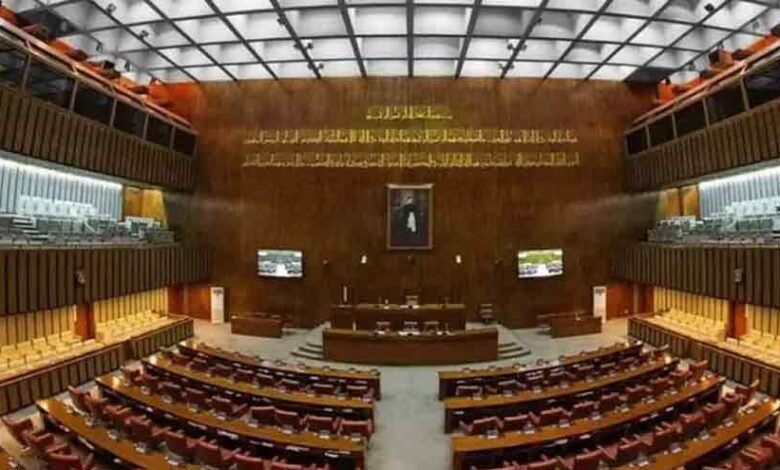
An official informed the Senate Standing Committee on Petroleum that the country will run out of liquefied natural gas (LNG) after April 14, which could make it difficult to meet the gas needs of the power sector in April.
Under the direction of Senator Manzoor Ahmed, the committee met to discuss the costs and accessibility of petroleum products throughout the nation.
The secretary of the Ministry of Energy’s Petroleum Division stated during a briefing that the supply of petroleum products has been hampered by tensions in the Middle East.
About 70% of Pakistan’s petroleum needs are met by imports from the area. Oil imports from Arab nations typically arrive in Pakistan in four to five days, but current shipping operations have been impacted.
The committee was told of the sharp increase in fuel costs worldwide. While the cost of gasoline has climbed from $74 to $130 per barrel, the price of high-speed diesel has gone up from $88 to $187 per barrel.
Senator Manzoor Ahmed stated during the conversation that oil marketing companies seemed to profit from the price increase. The petroleum secretary underlined, however, that the price changes were implemented to deter gasoline hoarding and guarantee ongoing imports, adding that the goal was to sustain supply nationwide rather than to benefit businesses.
Senator Hidayatullah Khan, another committee member, inquired about the pricing levels before to March 7 and the extent of the increase. In response, representatives of the Oil and Gas Regulatory Authority (OGRA) stated that while petrol prices have grown by almost 70%, diesel prices have surged by almost 100%.
An update on the nation’s fuel reserves was also given by officials. Pakistan currently has crude oil reserves for 11 days, diesel for 21 days, petrol for 27 days, LPG for nine days and JP-1 fuel for 14 days.
The committee was also informed by the petroleum secretary that a relief package for motorbike and rickshaw users is being considered by the government.
The committee was also informed by authorities that the home gas supply is still uninterrupted. Priority is being given first to household consumers, followed by commercial users, while other sectors are supplied afterward.
Officials further noted that Sui Southern Gas Company has reduced gas supply to a fertilizer plant by 50 percent. Gas supply to the power sector has also declined from 300 MMCFD to 130 MMCFD,