A project with a budget of Rs1.28 billion is proposed to improve agriculture and livestock in Thar.
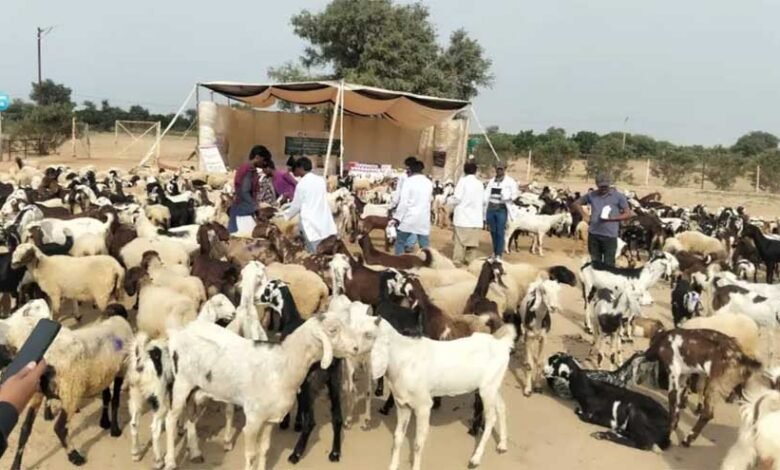
In order to improve livestock, horticulture, and sustainable ecosystem management in the Thar desert region, a project with a budget of Rs1.28 billion has been suggested. This effort would be accomplished through research, the transfer of technology, and the development of community capacity.
In accordance with the official records that are accessible through Wealth Pakistan, the initiative is known as Thar Community Actions for the Management of Sustainable Ecosystem, Livestock, Land, and Livelihood (THAR CAMELL).
The program will be carried out over a period of five years, beginning in July 2026 and ending in June 2031. It will be carried out by the Pakistan Agricultural Research Council (PARC) at the PARC-Arid Zone Research Institute (AZRI) Umerkot. It will encompass the Umerkot district as well as thirty union councils of Tharparkar in Sindh, which is a region that is a portion of the Thar desert.
The purpose of the project is to provide assistance to farming communities in the areas of agricultural innovation, livestock genetic improvement, disease control systems, sustainable natural resource management, and technology transfer of agricultural knowledge.
Additionally, it places an emphasis on value addition for exports, which includes the establishment of a dehydration plant, the production of dried vegetables and ber for export, and the introduction of contemporary technology as part of the E-Pakistan program. These technologies include systems for modern diagnostics, genotyping, and radio frequency identification.
In order to foster the alleviation of poverty and improve the standard of living in the local community, the program will focus specifically on impoverished Thari areas. As part of its approach for empowering farmers, the project intends to improve capacity and provide training to over 2,000 agriculture professionals.
Environmental interventions such as reforestation, arid horticulture, and rainwater recharge using TARAI are examples of practices that contribute to the resilience of desert ecosystems to climate change.
Among the project’s key objectives is the establishment of livestock and horticulture research institutes at PARC-AZRI Umerkot to improve livestock productivity, enhance genetic improvement of indigenous breeds, strengthen disease diagnostics and control, and develop demonstration sites for arid horticulture.
In addition to this, the program intends to strengthen community capabilities for the management of sustainable ecosystems and the enhancement of livelihoods.
According to the document, the project will create infrastructure for location-specific research and demonstration operations at the project site, as well as convert 180 acres of non-productive land into land that can be used for productive purposes.
The provision of machinery and field implements for research and field operations will contribute to the research activities that will be conducted. These activities will cover cattle, range, land and water management, as well as desert horticulture.
Additionally, the project will encourage the production of silage for livestock and will develop facilities for the examination of soil, water, and plants, as well as livestock services, animal insemination, and biotechnology laboratories. These facilities will be used to support advising services for researchers, extension workers, non-governmental organizations, and local farming communities.
These services will assist in providing appropriate suggestions for fertilizer, which will assist in increasing agricultural crop yield by up to thirty to thirty-five percent, while also enhancing research and infrastructural capabilities in the region.
In accordance with the text, the project is in accordance with national priorities, which include the 5Es Framework, the 13th Five-Year Plan, the Sustainable Development Goals of the United Nations, and the National Agriculture Innovation and Growth Programme (NAIGP).