Reduction in scheduled market hours anticipated
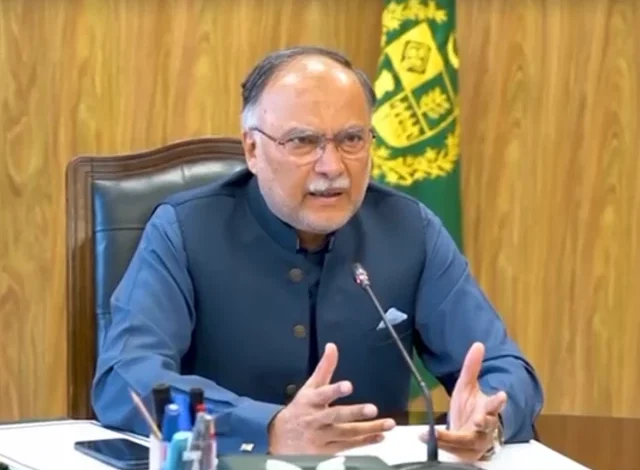
On Saturday, Minister for Planning Ahsan Iqbal advocated for the modification of market hours to diminish electricity consumption and limit oil usage, as the nation contends with escalating import expenses due to the worldwide oil crisis.
During a news conference in Lahore, the planning minister underscored the necessity of reducing energy expenditures to alleviate the economic pressure resulting from the ongoing fighting.
Iqbal emphasised the necessity of enhancing efficiency in petrol and diesel use, acknowledging Pakistan’s dependence on imported fuel for power generation.
He noted that marketplaces in Pakistan typically opened after 12 PM and operated until 2 AM, utilising “electricity generated from imported fuel.”Utilising electricity at night would now be created from furnace oil, incurring a cost of Rs60-80 per unit for the people,” he asserted, questioning whether such “irresponsible conduct” is appropriate for a nation confronting a significant crisis.”Crises are instances of behavioural transformation,” he stated.
Iqbal indicated that provinces were instructed to confer with traders and “develop a plan of action within a week to facilitate the prompt closure of markets.”
He stated that the policy would alleviate both the government and the public from the “unnecessary burden” of billions of rupees, urging traders to adopt a thoughtful perspective on the issue.
The planning minister asserted that markets in “developed countries or successful economies” like Japan, the US, Malaysia, Indonesia, and Turkiye do not remain open beyond 6pm or, at best, 8pm.Entering communities after 9 PM or 10 PM reveals utter tranquillity. Individuals have retired for the night. “Early to bed, early to rise,” he stated, emphasising that this was also the regimen recommended by Islamic beliefs.
The minister stated that the government has acknowledged unwarranted fare increases imposed by transporters, indicating that provinces had been instructed to negotiate costs with transporters to avert profiteering.He stated, “You can contribute to the nation’s development and stability by averting the superfluous consumption of even a single drop of petrol or diesel,” advocating for the public to implement various fuel-saving strategies.”If you travel to the office solo, consider carpooling with colleagues from your residence or vicinity,” Iqbal stated.
He urged individuals to refrain from using electricity unnecessarily to minimise the country’s import expenditures as much as feasible.
NPMC
On Saturday, Iqbal presided over a virtual meeting of the National Price Monitoring Committee (NPMC), instructing provincial governments to implement prompt actions to mitigate inflationary pressures in light of a recent rise in fuel prices.
The meeting assessed the effects of escalating fuel prices on transportation costs and vital goods.
Officials notified the committee that diesel costs had escalated considerably, while transport charges in key urban centers had surged by an average of 25–30 percent, with certain routes experiencing rises of up to 50 percent.
The minister, expressing concern, directed provincial authorities to guarantee that transport departments release updated fare notices within 24 hours and enforce them rigorously.
He underscored that the advantages of government subsidies should not be undermined by capricious price hikes enforced by transporters.
Iqbal instructed chief secretaries to allocate explicit responsibilities to provincial transport secretaries for fare regulation and adherence.
He advocated for improved field enforcement, encompassing random inspections and verification systems to detect overcharging.
The minister mandated weekly monitoring of vital goods, emphasising the potential “second-round effect” on food prices resulting from increased logistics costs.
The NPMC will now meet frequently, especially during the next month, to monitor price fluctuations closely.
The Pakistan Bureau of Statistics was assigned the responsibility of disseminating district-specific price rankings weekly to detect anomalous trends, facilitating prompt corrective measures by provincial administrations.
The minister additionally instructed market committees and district administrations to oversee wholesale and retail pricing and to monitor profit margins to avert hoarding and profiteering.
Particular attention was directed into guaranteeing a continuous supply of perishable and staple commodities, such as tomatoes, onions, potatoes, wheat, rice, and pulses.
The minister emphasised that the intended effects of government subsidies must be evident in market prices.”If subsidies are entirely transferred as price escalations, their intent becomes futile,” he remarked.
The panel expressed apprehensions regarding the pricing disparity of urea fertiliser between domestic and foreign markets, cautioning against potential smuggling hazards.
Iqbal instructed the interior ministry and provincial authorities to implement prompt measures to curtail smuggling and guarantee sufficient resources for farmers.