Pakistan’s oil import bill goes beyond IMF projection as global prices spike
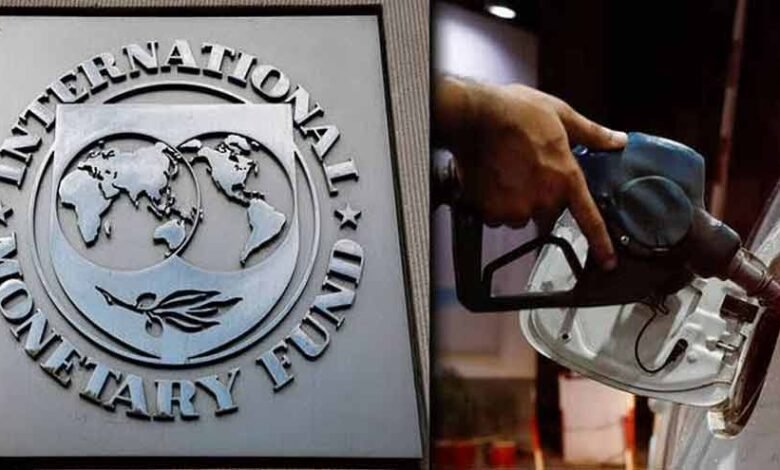
Pakistan’s yearly import bill for petroleum products has exceeded the International Monetary Fund’s (IMF) prediction for fiscal year 2025-26 following a dramatic spike in global crude oil prices due to escalating tensions in the Middle East.
The official data showed that the oil import bill in FY2025-26 stood at $16.86 billion, exceeding IMF’s prediction of $15.28 billion by $1.58 billion.
The statistics showed petroleum imports grew 5.76% on-year, as worldwide oil prices surged and the government continued to depend on imported energy to meet domestic demand.
The surge came amid jitters in oil markets over the dispute involving Iran, Israel and the United States and fears over shipping via the Strait of Hormuz, a critical waterway through which almost one fifth of the world’s oil supply passes. The uncertainty sent benchmark crude prices considerably higher in the closing months of the fiscal year, raising Pakistan’s import expenditures.
The IMF has estimated Pakistan’s petroleum import bill to be $16.31 billion for the ongoing fiscal year 2026-27. But analysts say the forecast might be under pressure if geopolitical tensions continue and global oil prices stay high.
The hike in import bill has also been reflected in domestic fuel prices with petrol and high speed diesel touching all time high levels in the past few weeks. The higher energy price is projected to stoke inflation, broaden the country’s import bill and boost demand for foreign currencies.
Pakistan’s economy is extremely sensitive to changes in the international energy prices as it imports the major portion of its crude oil and petroleum products. Along with machinery and edible oil, petroleum is among the country’s biggest imports. Petroleum is core to the trade imbalance and current account balance.
Despite the increasing petroleum import cost, the external sector of Pakistan remained reasonably stable in FY2025-26, aided by record workers’ remittances and tighter import management. But economists warn that a sustained period of high oil prices could make it more difficult to keep the macroeconomy stable and satisfy fiscal and external sector targets established with the IMF.
In official records, Pakistan’s oil imports have been estimated at $16.86 billion in FY2025-26, although the IMF had earlier put the figure at $15.28 billion for the year. The Fund’s revised predictions show imports could stay over $16 billion in FY2026-27, although the actual number will be primarily determined by international oil prices and domestic energy use.