The government denies “misleading” international media allegations about Imran Khan’s health and prison circumstances.
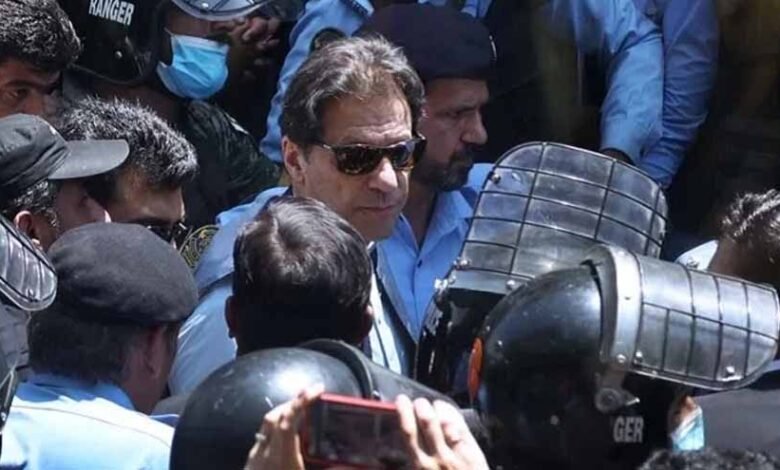
Imran Khan, the founder of Pakistan Tehreek-e-Insaf (PTI), has been the subject of “misleading reports” in foreign media regarding his health and prison conditions. The government has dismissed these reports, claiming that official documents do not substantiate assertions that he has been denied medical care or kept in isolation.
The Ministry of Information and Broadcasting called claims of abuse, deprivation, or punitive solitary confinement “fake propaganda” in a statement released on Saturday. It insisted that Imran Khan is incarcerated after being found guilty by courts with the necessary authority.
The ministry claims that the former prime minister has had access to visitors, phone calls, reading material, television, home-cooked meals, and exercise gear. He is housed in a private seven-cell complex with sleeping, lavatory and exercise facilities, according to the report.
Claims that Imran had been denied contact with his family were also refuted by the ministry. According to prison records, there were approximately 198 interview sessions involving over 900 visitor entries, including visits with his sisters, relatives, solicitors, physicians, and political representatives. Additionally, he was permitted to visit with his wife once a week; the most recent meeting took place on August 4.
According to officials, prison records also include information about phone, landline, and WhatsApp conversations with relatives in Pakistan and overseas, including a March 21 chat with one of his kids. On August 18, 19, and 25, he had recorded meetings with his sisters.
Allegations that sufficient medical attention had been denied were also denied by the administration. In addition to regular evaluations by the prison physician, it stated that Imran had undergone about thirty medical examinations during his incarceration by specialist teams and medical boards from Pims, Shifa International, Shaukat Khanum, and Al-Shifa Trust Eye Hospital.
According to the ministry, he underwent five anti-VEGF injections, retinal imaging, medication, and follow-up appointments as part of specialised therapy for a retinal ailment. According to medical evaluations done in July and on August 21, he was classified as “orientated, stable,” with no signs of acute or uncontrolled decline.
Imran’s sister, Dr. Uzma Niazi, was quoted in the statement as saying that he was “100 percent fit,” that his blood pressure was 120/80, and that his eye problem had nearly fully recovered.
According to the government, Imran’s sister was there when the Supreme Court’s orders for his medical examination and treatment were carried out.
It also noted that while related procedures are ongoing, the Supreme Court had ordered Imran’s family, PTI, and attorneys to refrain from publicly disclosing or sharing his medical condition or reports with the media.
According to the administration, medical records and court orders should be used to assess his health rather than political allegations. It further stated that controlling communications and visits in accordance with court rulings, prison regulations, and security requirements shouldn’t be interpreted as restricting access.
The ministry noted that both of Imran’s sons have genuine National Identity Cards for Overseas Pakistanis, which it characterised as recognised travel papers for entering the nation, in response to claims that they were unable to travel to Pakistan to meet him.
The ministry asked international media outlets to differentiate between politically contested accusations and verifiable medical and prison data.