Amid a national austerity drive, Pakistan canceled the March 23 parade.
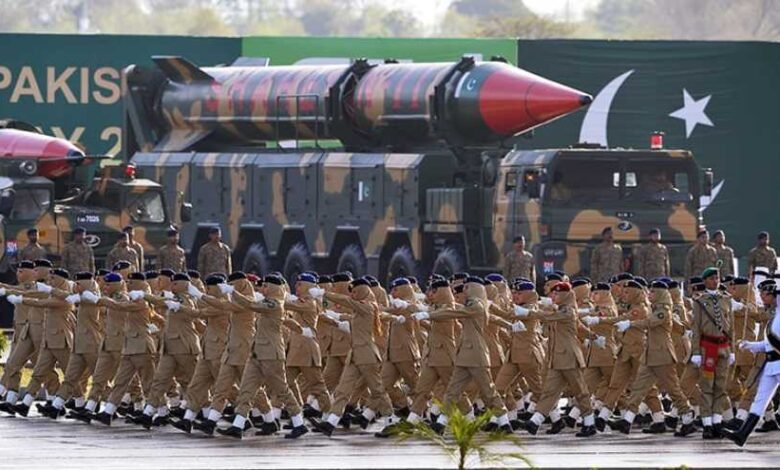
Due to the ongoing Gulf oil crisis brought on by the conflict involving Iran, the United States, Israel, and Arab countries, the federal government has decided not to hold the Pakistan Day parade on March 23, 2026.
In view of the changing circumstances, the government confirmed that all associated ceremonial activities have been canceled. Rather, the day will be commemorated nationwide with modest and respectable flag-hoisting events.
As South Asia continues to be impacted by interruptions in global energy supply chains, the action underlines the wider influence of regional volatility on Pakistan’s domestic plans. According to authorities, the choice was made to respect the historical significance of the day while coordinating national observances with current logistical and economic realities.
Pakistan Day commemorates the 1940 acceptance of the Lahore Resolution, a significant event that finally resulted in the nation’s formation. Islamabad traditionally celebrates the day with a massive military parade that represents the country’s resiliency, unity, and defense capabilities.
The cancellation takes place in the context of a growing energy crisis associated with the ongoing confrontation between Iran, the United States, and Israel, which has seriously hampered the flow of gas and oil via the Strait of Hormuz. Due to the fighting, there has been less traffic and increased security risks on the vital waterway that transports a large amount of the world’s energy.
Following strikes on the Gulf region’s energy infrastructure, the price of oil has skyrocketed globally, with Brent crude climbing dramatically above pre-war levels. Concerns about supply stability and growing costs have been raised by the disruption, which has directly affected nations like Pakistan that depend significantly on petroleum imports.
Governments in South Asia have implemented emergency measures, such as power outages, shortened workdays, and switching to other energy sources, to manage fuel shortages and conserve gasoline. In order to preserve supply flows throughout the crisis, Pakistan has also taken action to protect cargo and look into alternate routes.
March 23 will still be commemorated with customary flag-hoisting ceremonies at important government buildings, educational institutions, and public areas despite the parade’s cancellation. It is anticipated that these celebrations will be carried out in a modest but respectable way, honoring the importance of the day without ostentatious displays.
According to officials, the Lahore Resolution’s aim of freedom and unification is what Pakistan Day is all about. While taking into account the current state of the country, the scaled-down observance seeks to maintain this spirit.
The parade has attracted sizable crowds and attention from across the world in the past with military contingents, aircraft flypasts, and cultural displays from all around the nation. But this year, the emphasis is on small-scale events that highlight introspection and unity within the country.
Pakistan Day
Pakistan Day is usually celebrated with a number of ceremonial events, starting with the national song being recited and the flag being raised. The federal capital usually hosts a 21-gun salute, which is followed by statements from national leaders outlining the nation’s achievements and difficulties.
When the parade takes place, it features cultural exhibits that represent Pakistan’s various areas combined with military prowess. Additionally, it provides a forum for diplomatic interaction, and international dignitaries frequently attend.