At the Pak-China investment conference, 79 Memorandums of Understanding totaling $4.5 billion were signed: minister
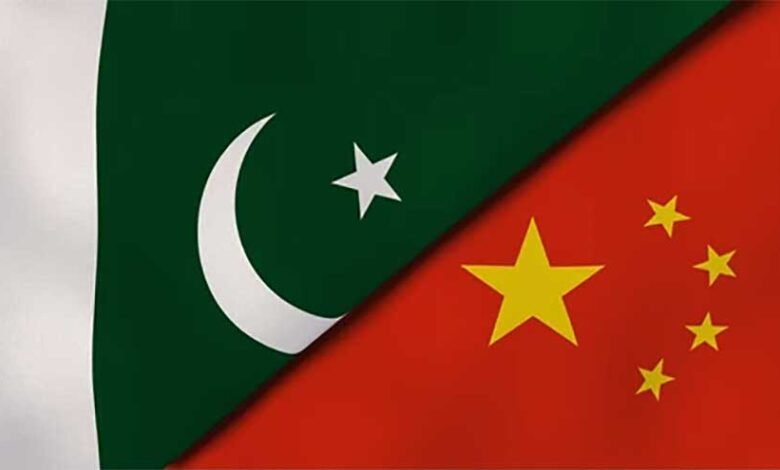
During the Pakistan-China Agri-Investment Conference on Tuesday, 79 memoranda of understanding (MoUs) worth $4.5 billion were signed by Chinese and Pakistani businesses, according to Minister for National Food Security and Research Rana Tanveer Hussain.
Speaking at a news conference, the minister stated that the conference’s objectives were to enhance business-to-business interactions between companies from both nations and to encourage investment partnerships in Pakistan’s food and agriculture sectors.
According to him, the meeting also aimed to enhance institutional ties between the public and commercial sectors while showcasing Pakistan’s agricultural value chains, investment potential, and policy reforms implemented by the current administration.
116 Chinese and 165 Pakistani companies were invited to the conference, according to Rana Tanveer Hussain. The event facilitated direct interaction between private sector organizations, encouraged focused investment in priority agriculture subsectors, and supported supply chain development, technology transfer, and value addition.
The minister added that an agriculture wing will be established at Pakistan’s Embassy in China to further foster bilateral agri-cooperation and that a separate wing had been established within the ministry for the prompt implementation of the signed Memorandums of Understanding.
He emphasized the significance of agriculture in the growth of the country’s economy, stating that the cattle industry accounted for nearly 60% of all agricultural production and that the sector contributed roughly 26% of GDP.
The minister noted that the present conference was a continuation of previous forums conducted last year and adding that the Prime Minister was eager to follow the Chinese agriculture development model.
He added that export interceptions by importing nations had decreased from 377 to 36 as a result of the regulatory environment being tightened to enhance agricultural exports.
In response to a query, he stated that the primary cause of the decrease in exports of domestic agro-products like rice was a drop in the global prices of agricultural commodities. He also mentioned that a system was being developed to increase exports of meat, rice, and other goods.
By encouraging the production of oilseeds like sunflower and canola, he continued, the government was also attempting to lower the import price of agro-based goods, such as edible oil.