CJP Yahya Afridi travels to Tharparkar to examine the judicial systems and the administration of justice.
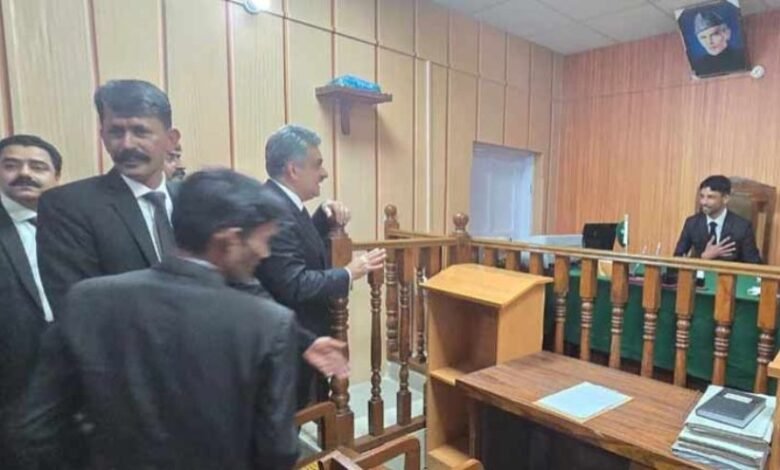
According to an official statement, Pakistan’s Chief Justice Yahya Afridi visited the Tharparkar district on Tuesday to examine the administration of justice and evaluate how well the legal system is operating.
In his role as Chairman of Pakistan’s Law and Justice Commission, he made the tour. He went on the field visit with the Chief Justice of the Sindh High Court, which was aimed at assessing the infrastructure and judicial access in outlying districts.
The constitutional commitment to equality, inclusivity, and peaceful coexistence was represented throughout the visit. The chief judge examined the working environment of the judiciary by inspecting court sessions and administrative setups at the Civil Court Complex in Nagarparkar.
CJP Afridi emphasized the value of public assistance in maintaining the judiciary’s dignity throughout the inspection. Highlighting their role in enhancing access to justice, he expressed gratitude for the existence of necessary facilities such as the Women Facilitation Center, clean drinking water, solar-powered systems, and an e-library.
The top justice also had an interactive meeting with representatives of other bar societies, according to the statement. In order to guarantee efficient and prompt administration of justice, the conversation centered on enhancing positive collaboration between the bench and the lawyers.
The chief judge visited Churio Jabal Durga Mata Temple and Kasbo Temple. In keeping with constitutional protections, he emphasized the commitment to minority rights and religious freedom during these travels.
Later, the top justice went to the Mithi District Court Complex to examine judicial concerns, including infrastructure, women-friendly facilities, and case management systems. He looked at operational elements meant to increase the effectiveness and accessibility of the court.
He ordered the formal documentation of access, sanitation, and functionality limitations. The visit is a component of the Law and Justice Commission of Pakistan’s continuous field-based and reform-driven efforts to fortify the nation’s judicial system.