Dera Ismail Khan’s suicide explosion suspect is identified by CTD
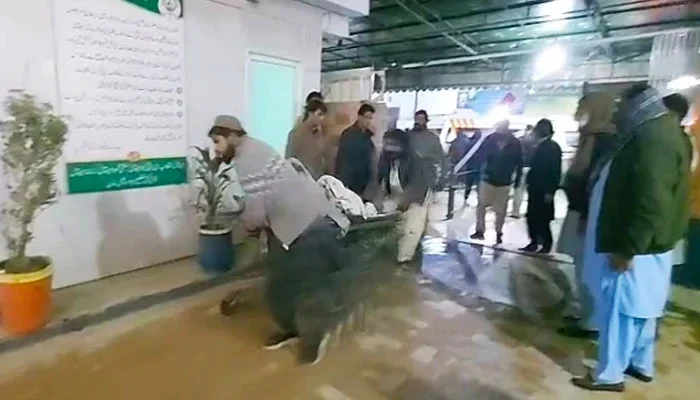
The Counter-Terrorism Department (CTD) said on Sunday that the suicide bomber who attacked a wedding celebration in Dera Ismail Khan and killed seven people has been identified.
During a marriage celebration at the home of Noor Alam Mehsud, the head of the local peace committee, the bomber, Abdul Rahman, set off explosives in a guest room.
After the event’s attendees had assembled for the celebrations, the attack happened late on Friday night.
A case has been filed under terrorism and related charges, according to CTD officials.
DNA samples and other evidence were retrieved from the blast site by forensic specialists, and they are currently being analyzed as part of the continuing investigation.
The CTD investigation claims that Abdul Rahman was raised in an Afghan refugee camp and that he attended madrassas and non-formal educational institutions for his early schooling.
The investigators thought that during his early years, he was influenced by extreme propaganda.
Waheedullah Mehsud, also known as Jigri, Abdul Majeed Lagri Advocate, and an anonymous 29-year-old youth have been identified as the deceased.
Because these committees are seen by extremist groups as collaborators with the government security system, heads of peace committees are often targeted by militant groups operating in Khyber Pakhtunkhwa region, which borders Afghanistan.
Since the Taliban took back control of Afghanistan in 2021, there has been an increase in cross-border terrorist attacks in Pakistan.
Particularly impacted by these attacks are the Afghan-bordering regions of KP and Balochistan.
In a press conference on January 6, ISPR Director General Lieutenant General Ahmed Sharif Chaudhry stated that 75,175 IBOs were conducted nationwide in 2025.
He provided a breakdown, stating that 1,739 operations were carried out throughout the rest of the nation, 14,658 IBOs were carried out in KP, and 58,778 in Balochistan.
According to Lt Gen Chaudhry, 5,397 acts of terrorism were registered across the country in the past 12 months. According to him, of these, 3,811 happened in KP, 1,557 in Balochistan, and 29 in other regions of the nation.
He said that last year’s counterterrorism efforts killed 2,597 terrorists. He added that Afghan militants were involved in all ten of the country’s biggest terror strikes and that both soft targets and civilians had been specifically targeted.
Pakistan has repeatedly urged the Afghan Taliban government in Kabul to stop terrorists from using its territory against Pakistan. The issue has recently led to increased tensions, including cross-border attacks by the Afghan side and Pakistani forces’ retaliation.