Global governance has to include emerging economies more: Aurangzeb
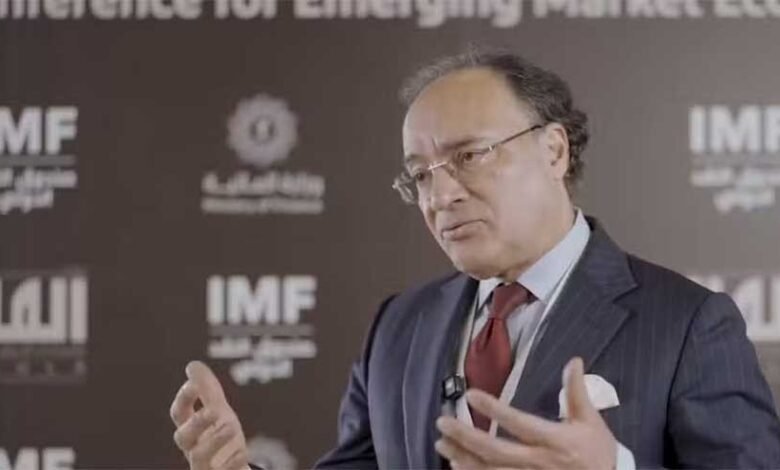
In light of their increasing contribution to global growth and GDP, emerging markets and developing economies need to play a bigger role in determining global economic governance, according to Senator Muhammad Aurangzeb, Federal Minister for Finance and Revenue.
According to a statement released here on Thursday, the Finance Minister emphasized the value of coordinated policy responses and group discussions in an increasingly complex global environment in an interview with the Saudi Press Agency (SPA) during his attendance at the second AlUla Conference for Emerging Market Economies.
“The forum is a timely platform for finance ministers and central bank governors to exchange perspectives amid heightened geopolitical tensions, trade fragmentation, and rapid technological transformation, particularly in artificial intelligence,” the Minister said, thanking the Kingdom of Saudi Arabia for hosting the conference.
He pointed out that a lot has changed in the world since the conference’s first edition, which emphasizes the necessity of open but structured policymaker involvement.
“These platforms allow emerging economies to align strategies, share lessons, and strengthen cooperation in navigating global economic challenges,” he said.
Senator Aurangzeb emphasized the growing economic significance of emerging markets and developing economies during the conference’s opening sessions, saying that their increasing proportion of global output and growth must now be matched by increased influence in international decision-making processes.
He emphasized that implementation, not just discussion, is what really makes such high-level encounters valuable. “It is not just about talks,” he said, “but about turning discussions into tangible policy actions and carrying them out throughout the year.”
The finance minister was confident that the AlUla Conference’s conclusions will help developing economies coordinate better and increase their voice as a group in creating a more robust and inclusive global economic system.