Have Iranian officials abandoned the compulsory hijab?
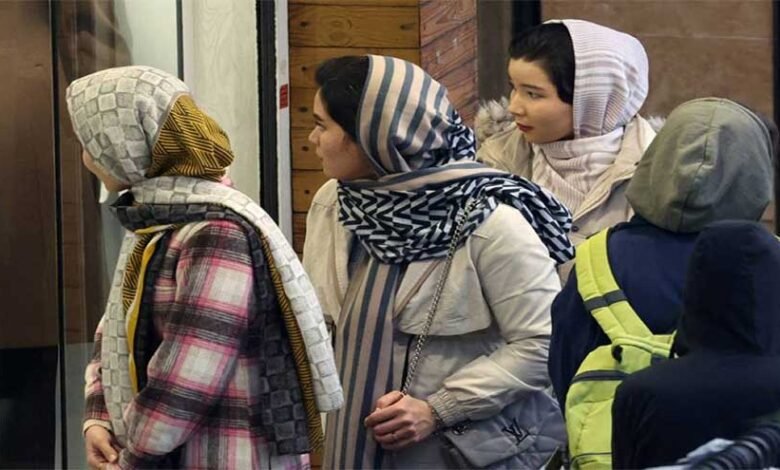
Women dancing to electronic music at a DJ performance, walking sans headscarves through contemporary art exhibitions and cafes, showcasing fashionable trends reminiscent of European streets.
Until recently, such images would have been inconceivable in the Islamic Republic of Iran, where a stringent dress code mandates that women wear the headscarf in public since shortly after the 1979 revolution that deposed the pro-Western shah.
Despite the growing prevalence of casual disregard for the norm, Iran’s administration maintains that the hijab is a legal requirement and is enforcing a crackdown that has resulted in the detention of dissenting individuals who reject the compulsory headscarf.
The tension has arisen at a pivotal juncture for the clerical system, which is still recuperating from the previous 12-day conflict with Israel, while Supreme Leader Ayatollah Ali Khamenei is now 86 years old.
The statewide protests of 2022-2023, ignited by the custodial death of Mahsa Amini, who was apprehended for purported hijab violations, remain a vivid recollection.
Analysts and activists assert that authorities have recently relaxed the enforcement of the mandatory hijab in daily life; nonetheless, they caution that this does not signify a departure from a fundamental ideological tenet of the Islamic republic, warning that a resurgence of repression to reinstate it might occur at any moment.
Roya Boroumand, cofounder and executive director of the US-based Abdorrahman Boroumand Center for Human Rights in Iran, described the sight of women without headscarves as “heartwarming,” attributing it to grassroots societal pressure rather than “a reform bestowed from above.”
“What we observe today is undeniably the outcome of years of relentless civil disobedience by Iranian women and girls who have endeavored to establish and safeguard a limited sphere of freedom in public life,” she said AFP.
Women with braids, curls, and bleach-blond hair have become prevalent in public, while more conventional women don the hijab or chador.
The tendency, increasingly evident in recent months in Tehran and other large cities, now encompasses all generations to differing extents.
Some women are donning tighter garments and ensembles that reveal their shoulders, legs, and midriffs, much to the chagrin of conservatives who condemn such “nudity” in public.
DIFFICULT TO ‘RECONTAIN THE GENIE’
Boroumand stated that the implementation of the mandatory hijab differed around the country, and that authorities continued to shut down companies perceived to have neglected the regulation.
This month, authorities apprehended two individuals who coordinated a marathon on Iran’s Gulf island of Kish, where viral photographs depicted numerous women running without head coverings in the streets. They also closed a café that functioned as the starting and concluding point.
Arash Azizi, a postdoctoral associate and lecturer at Yale University, said AFP that “the regime has relinquished strict enforcement of the mandatory hijab, yet it has not entirely abandoned it as a principle.”
“It would represent a significant ideological concession that it is unwilling to accept.” We continue to observe establishments shuttered and individuals penalized or apprehended for insufficient adherence to hijab regulations. However, the government recognizes that it will be exceedingly challenging to reverse the situation.
Recent events have gained viral attention on social media; for example, the grand inauguration of a mall in Tehran featured young individuals dancing and moving to a DJ’s music.
This month’s match in Iran’s second football level was notable not only for the attendance of women, although in a segregated section of the stadium, but also for the sight of many being bareheaded while displaying scarves of the local club.
Last month, the office of Khamenei, in power since 1989, faced criticism from certain ultraconservatives after it published a photograph in its publication of Iranian woman Niloufar Ghalehvand, a pilates instructor who was killed during the Israeli attacks, wearing a baseball cap instead of a hijab.
An exhibition during design week at Tehran University included bareheaded women interacting freely among audaciously experimental art displays.
However, it was shut down prematurely following concerns from clerics, indicating the authorities’ willingness to retaliate.
‘SUBSTANTIAL RISK’
Judiciary director Gholamhossein Mohseni Ejei recently spoke of an impending crackdown, stating that intelligence services have been directed to discover and report “organized currents promoting immorality and non-veiling,” and that authorities would take action against the implicated individuals.
Khamenei, on December 3, supported the hijab in a speech, asserting that Iranian women who adhere to Islamic attire “can advance more than others in all domains and assume an active role both in society and within the household”.
Narges Mohammadi, a Nobel Peace Prize laureate who consistently declined to wear the hijab in public since her release from prison on medical grounds in December 2024, was apprehended on December 12 alongside numerous other activists during a memorial service for a lawyer discovered deceased earlier that month.
“A significant risk of a renewed and more severe crackdown exists,” stated Boroumand.
Advocates caution that although visuals of coffee shops and music may suggest liberty, repression has intensified in recent months following the conflict with Israel.
The apprehension of Mohammadi represents the most recent action against a notable dissident individual. This year, there have been over 1,400 executions, significantly surpassing the figures from 2024, and groups such as the Bahai, Iran’s largest non-Muslim religious minority, are facing heightened persecution.
“We are witnessing an intensification of repression in other areas, rather than a compromise,” stated Bouroumand.
The compulsory hijab has been integral to Iran’s Islamic regime and a reaction to what the authorities have historically referred to as “Gharbzadegi,” or the “West-toxification” of Iran during the shah’s rule.
The topic is divisive among Iran’s political establishment, with moderate politicians like President Masoud Pezeshkian asserting that women cannot be compelled to wear the headscarf.
Azizi stated, “Khamenei emphasizes this, but the future leadership of the regime, following his demise, will probably need to formalize what is already de facto and relinquish the mandatory hijab.”