Iran affirms that security chief Ali Larijani was killed in an Israeli attack.
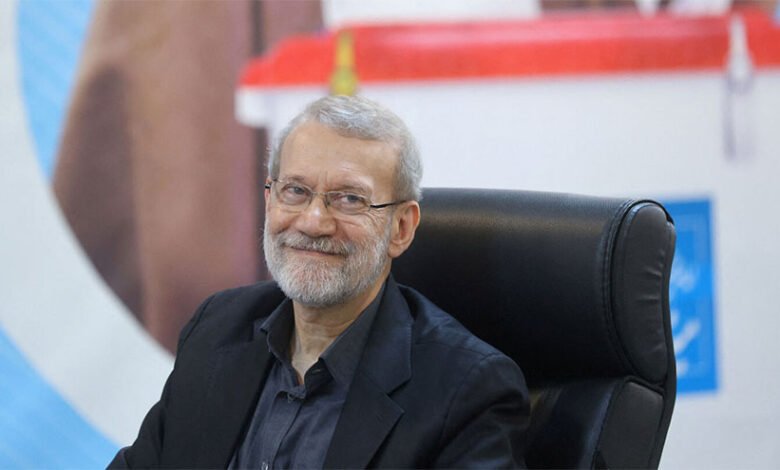
Security head Ali Larijani was killed in an Israeli strike on Tuesday, according to Iranian state television.
Iran’s Supreme National Security Council acknowledged Larijani’s murder in a statement published by the semi-official Mehr news. Earlier today, Israel claimed to have assassinated Larijani through targeted attacks.
According to a statement from the council that Mehr reported, “after a lifetime of striving for the elevation of Iran and the Islamic Revolution, he finally reached his long-cherished wish, answered the call of truth, and proudly attained the blessed rank of martyrdom in the service front.”
Following weeks of intensifying fighting, Israel earlier claimed to have assassinated Iran’s influential national security chief, Ali Larijani, in a strike on Tehran. Meanwhile, new bombardments struck towns throughout the Middle East.
Although Iranian authorities have not yet confirmed Larijani’s death, Israeli Defense Minister Israel Katz stated on Tuesday that he was “eliminated last night.”
Larijani’s official Telegram account announced that he would be making a statement soon after learning of his murder.
Shortly after, a handwritten note for the funeral of Iranian naval casualties was published in the account. However, neither the allegations of Larijani’s purported assassination nor any evidence of his survival were mentioned in the account.
Israel made the claim the day after Gholamreza Soleimani, the leader of the Basij force of the Revolutionary Guards, was allegedly killed in a different hit.
Israel’s president, meanwhile, thanked France for offering to mediate the conflict in Lebanon, but he emphasized that Europe should adopt a more aggressive stance against Hezbollah.
After initiating ground operations in the country’s south, the Iranian-backed organization has been involved in intense combat with Israeli forces.
President Isaac Herzog urged European cities to “act, not just appeal for calm,” telling the French press agency AFP that “the priority now is to dismantle Hezbollah’s war machine.”
Astonishment for Tehran
Following the joint US-Israeli bombings on February 28 that murdered Ayatollah Ali Khamenei, the country’s supreme leader, the purported assassination of Larijani is yet another shock to Iran’s leadership.
Mojtaba Khamenei, his son and successor, has not been spotted in public, raising questions about his health. Moscow would “not comment” on a story in a Kuwaiti newspaper that he had been taken to Moscow for medical treatment, according to Russian Presidential Press Secretary Dmitri Peskov, who was cited by the official Russian Tass agency.
Overnight, Tehran was rocked by explosions that Israel claimed targeted “Iranian terror infrastructure” in the capital and other locations.
Hezbollah’s primary stronghold in Lebanon, the southern suburbs of Beirut, was the target of dawn airstrikes that reportedly left buildings on fire and rubble all over the streets.
More than a million people have been evacuated since early March, according to Lebanon’s authorities, and many of them are currently taking refuge in temporary facilities.
Israel has been asked to restrict its actions by Western allies, such as France, Germany, and Britain, who have warned of regional collapse.
Oil Shock
Iran has retaliated with attacks on US interests and Gulf infrastructure, including tankers in the Strait of Hormuz, disrupting a fifth of global oil traffic and driving prices higher.
The United States has called on its partners to join a naval coalition to secure the waterway, but enthusiasm has been muted.
British Prime Minister Keir Starmer said he was working “with allies on a viable plan” to reopen the strait while rejecting a NATO‑led mission. Germany echoed that view, warning that the alliance should not be drawn into Washington’s war.
Meanwhile, Iran’s health ministry says at least 1,200 Iranians have died in US and Israeli strikes since the start of the conflict.
In neighbouring Iraq, rockets targeted the US embassy early Tuesday, forcing air defences into action over Baghdad’s heavily fortified Green Zone.