Iran is defiant as Trump’s threat to infrastructure approaches.
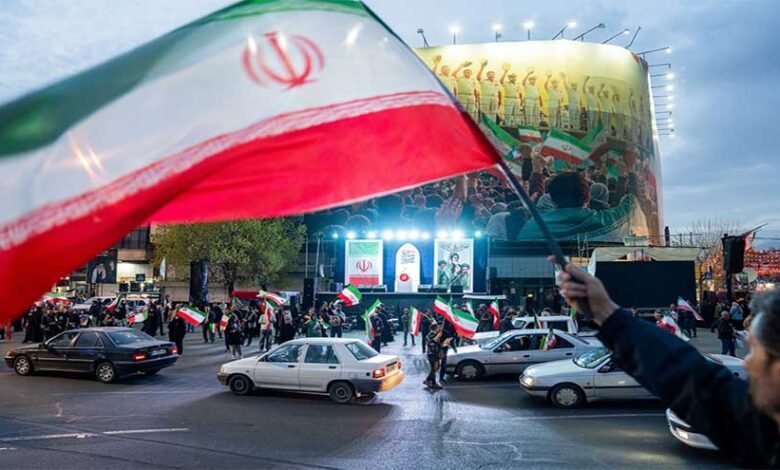
Iran faced a deadline on Tuesday to agree to a deal or risk the “complete demolition” of its vital civilian infrastructure, according to US President Donald Trump.
In a defiant response, the Iranian army declared that Trump’s “arrogant rhetoric and baseless threats” will not impede operations against Israeli and American forces.
The US president has threatened to launch another deadly round of bombing if Tehran does not reopen the Strait of Hormuz oil conduit to international shipping by midnight GMT on Tuesday, five weeks into the US-Israeli assault on Iran.Trump dismissed claims that such an action would be a war crime, saying, “We have a plan…where every bridge in Iran will be decimated by 12 o’clock tomorrow night, where every power plant in Iran will be out of business, burning, exploding and never to be used again.”At a press conference, Trump described the rescue of the two crew members of a US F-15 fighter jet shot down over Iran last week. “I mean complete demolition by 12 o’clock, and it’ll happen over a period of four hours — if we wanted to,” he said.
Meanwhile, a 45-day ceasefire proposal hailed by international negotiators has not yet been finalized, according to both Trump and Iran.
The idea, which the US media claims is being handled by Pakistan, Egypt, and Turkey, was a “significant proposal,” according to Trump, but he later claimed it was insufficient.
Tehran, according to officials cited by Iranian state media, “has rejected a ceasefire and insists on the need for a definitive end to the conflict.”
In response to Trump’s threats, the Khatam Al-Anbiya central command of the Iranian army described him as “delusional” and declared that “crushing operations of the warriors of Islam against the American and Zionist enemies” would go on.
UN HORMUZ VOTE
Additionally, diplomatic sources informed AFP that the UN Security Council is scheduled to vote on a weakened resolution on Iran’s threats to the Strait of Hormuz on Tuesday, following the possibility of vetoes for stronger earlier drafts.
Since the United States and Israel began the conflict on February 28, Iran has effectively blocked the vital waterway, which has had an impact on the world economy.
Oil and gas prices have skyrocketed as a result of Iran’s virtual blockade of Hormuz, which typically carries one-fifth of the world’s oil. This has forced nations all around the world to take action to mitigate the consequences.
Two weeks ago, Bahrain began talks on a draft resolution that would have provided a clear UN mandate to any state seeking to use force to unclog the strait, with the support of other oil-exporting Gulf nations.
However, the text has been scaled down due to protests from a number of permanent members who possess veto power, and the most recent document that AFP has seen does not specifically authorize force.
Tehran has retaliated with missile and drone attacks throughout the area in response to the United States and Israel’s ongoing attacks on sites in Iran.
Explosions were reportedly heard early on Tuesday in areas of Tehran and neighboring Karaj, according to Iranian media.
The Houthi rebels in Yemen claimed to have attacked Israel in support of Hezbollah in Lebanon and their ally Iran.
The largest Iranian petrochemical plant, Asaluyeh on the Gulf coast, and another outside of Shiraz in central Iran were both targeted by Israeli airstrikes.
According to Israel’s military, it also attacked Iranian air force targets, such as aircraft and helicopters at airports in Tehran and other locations.
GUARDS INTELLIGENCE CHIEF DEATH
Kuwait and the United Arab Emirates reported strikes on Monday, indicating that Gulf countries that are allies with the United States had been drawn into the conflict.
According to the Saudi defense ministry, seven ballistic missiles that were headed eastward on Tuesday were intercepted and destroyed by the country’s air defenses.
It stated that a damage assessment was in progress and that debris had fallen near power plants.
Iran’s Revolutionary Guards announced on Telegram on Monday that US-Israeli strikes had killed their intelligence chief, Majid Khademi, at first light.
The commander of the Guards’ Quds Force special operations unit, Asghar Bagheri, was also reported dead by Israel’s military on Sunday.Benjamin Netanyahu, the prime minister of Israel, declared, “We will reach anyone who seeks to harm us.”
A “major retaliatory strike” was promised by the Guards’ Intelligence Organization against those who killed their commanders.
Iran has persisted in attacking Israel; on Monday, four bodies were found in a residential building in the northern city of Haifa that had been hit by a missile, according to the military and medical personnel.