Mojtaba Khamenei ascends to the position of Supreme Leader of Iran, succeeding his father.
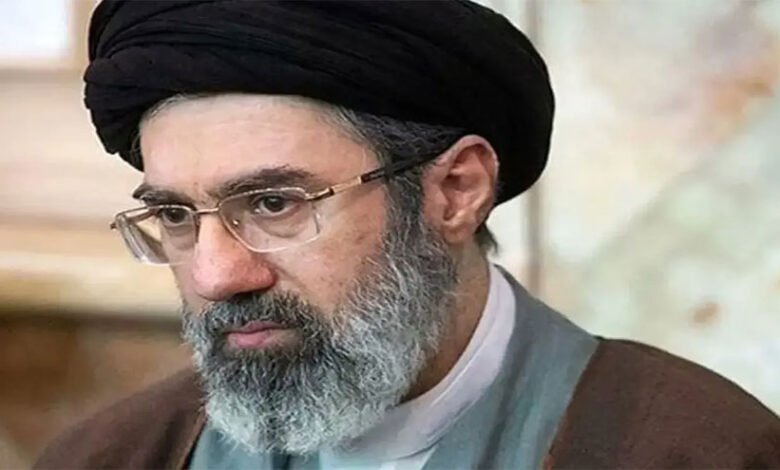
Mojtaba Khamenei, the progeny of Iran’s deceased supreme leader, has been designated as his successor, as reported by Iranian state television early Monday, amidst a significant escalation in the conflict that commenced following his father’s assassination less than two weeks prior.
The younger Khamenei had long been regarded as a candidate for the position, even before to the Israeli strike that resulted in the death of Ayatollah Ali Khamenei, and despite lacking any election or appointment to a governmental role.
The announcement made after midnight followed indications of discord among Iranian officials as the nation anticipated a decision by the 88-member Assembly of Experts, a body of clerics responsible for selecting the supreme leader. State television broadcast a statement indicating his selection was based on “strong” votes, advocating national unity in support of him, and displayed scenes of public celebrations in Tehran.
Since the Islamic Revolution nearly fifty years ago, there has been only one additional transfer of power in the role of supreme leader.
The reclusive younger Khamenei has not made a public appearance for several days. He currently occupies the core of Iran’s theocracy and will possess ultimate authority over all governmental affairs. He will assume the role of commander-in-chief of the military and the formidable paramilitary Revolutionary Guard, and acquires a stockpile of highly enriched uranium that might be utilized to construct a nuclear bomb, should he decide to authorize it.
He is also likely to encounter criticism from the U.S. U.S. President Donald Trump stated, “Khamenei’s son is unacceptable to me.” “We seek an individual who will foster harmony and tranquility in Iran.”
The White House did not promptly reply to a request for commentary.
Trump informed ABC News earlier on Sunday that he desires influence over the selection of leadership following the conclusion of the battle, asserting that a new leader “will not endure for long” without his endorsement.
The Revolutionary Guard released a statement of endorsement, while the Iran-supported Lebanese militant organization Hezbollah posted a portrait of the younger Khamenei on Telegram, captioned, “Leader of the blessed Islamic revolution.”
REGIONAL DISCONTENT MOUNTS REGARDING STRIKES
The civilian casualties increased as Bahrain alleged that Iran attacked a desalination facility essential for drinking water, while oil storage in Tehran burned after nighttime Israeli airstrikes.
In a demonstration of escalating regional discontent, the Arab League leader criticized Iran for its “reckless policy” of assaulting neighboring countries, particularly those that accommodate U.S. personnel. Since the onset of the war on February 28, Gulf nations have endured many missile and drone strikes, while Iran’s ruler has pledged to escalate assaults.
Saudi Arabia announced its initial fatalities, stating that a military projectile struck a civilian area, resulting in the deaths of two individuals of Indian and Bangladeshi nationalities. Foreign residents and laborers constitute the majority of war-related fatalities in Gulf countries.
Israel announced its initial soldier fatalities, stating that two were killed in southern Lebanon, where its force is engaged in combat with the Iran-supported militant organization Hezbollah. The U.S. military reported that a service man succumbed to injuries sustained from an Iranian assault on forces in Saudi Arabia on March 1. Seven U.S. soldiers have been killed.
The conflict has resulted in a minimum of 1,230 fatalities in Iran, at least 397 in Lebanon, and at least 11 in Israel, as reported by officials.
IRAN’S PRESIDENT ADOPTS A MORE ASSERTIVE STANCE
Iranian President Masoud Pezeshkian retracted conciliatory remarks made the previous day, in which he expressed regret for assaults on neighboring territories. Iranian hard-liners promptly refuted him, asserting that the military strategy will remain unchanged.
Pezeshkian stated on Sunday, “The greater the pressure exerted upon us, the more robust our response will inherently be.”
Pezeshkian has implored adjacent nations to refrain from participating in U.S. and Israeli assaults. The strikes by the U.S. have originated from American bases and boats in the region, rather than from Gulf Arab governments.
The topography of certain countries in the region, both explicitly and implicitly, is controlled by adversaries, and these locations are exploited against our nation in acts of aggression. Judiciary chairman Gholam Hossein Mohseni-Ejei stated on X on Saturday that vigorous assaults on these targets will persist.
Mohseni-Ejei and Pezeshkian were members of the three-person leadership council governing Iran.
ASSAULT ON DESALINATION AND OIL INSTALLATIONS
Bahrain, Kuwait, the United Arab Emirates, and Saudi Arabia claimed further Iranian missile launches directed at them.
Bahrain accused Iran of indiscriminately assaulting civilian targets and damaged one of its desalination facilities, however its electricity and water authorities reported that supplies were operational.
Desalination facilities provide water to millions of inhabitants in the area and thousands of marooned travelers, heightening concerns regarding potential catastrophic threats in arid desert nations.
The strike on the desalination plant followed Iran’s assertion that a U.S. airstrike had inflicted damage on the facility. Foreign Minister Abbas Araghchi stated that the strike on Qeshm Island in the Strait of Hormuz has disrupted the water supply to 30 villages.
He cautioned that by acting in this manner, “the U.S. established this precedent, not Iran.”
In response, CENTCOM spokesperson U.S. Navy Captain Tim Hawkins stated, “U.S. forces do not target civilians – unequivocally.”
Iranian officials reported that Israel’s nocturnal assaults on four oil storage vessels and a gasoline transfer station resulted in four fatalities. Witnesses in Tehran reported that the smoke was so dense it appeared as though the sun had not yet risen.
The Israeli military stated that the oil stockpiles were utilized by Iran’s military as fuel for missile launches.
The Iranian Red Crescent Society cautioned Tehran residents to adopt measures against hazardous air pollution and the potential for acid rain.
It also said that over 10,000 civilian properties nationwide had sustained damage, including residences, educational institutions, and nearly thirty health facilities. Additionally
Parliament Speaker Mohammad Bagher Qalibaf cautioned that it may soon become increasingly difficult to produce and market oil. Several regional producers, notably those in Iraq, have reduced production due to threats in the Strait of Hormuz.
According to Veys Karami, managing director of the National Iranian Oil Products Distribution Company, Iran possesses adequate petroleum supplies.
Lebanon reports that half a million individuals have been displaced.
Lebanon said that more than half a million individuals have been displaced during the week of hostilities between Israel and Hezbollah.
The true figure is probably greater. The figure of 517,000 in Lebanon pertains to individuals who registered on the government’s online platform. In the past week, Israel has urged inhabitants in numerous towns around southern Lebanon and all of Beirut’s southern suburbs to flee due to escalating hostilities.
Health Minister Rakan Nassereddine reported that 83 children and 82 women are among the deceased.
In Beirut, displaced families crowded into schools, slept in vehicles, or occupied open spaces along the Mediterranean Sea, where some utilized firewood for warmth. The government announced the opening of a sports stadium to accommodate thousands more individuals.
Israel’s military offensive commenced last week following Hezbollah’s missile attacks on northern Israel during the initial days of the conflict. The strikes have reached their highest intensity since the ceasefire in November 2024. Israel has persistently conducted near-daily strikes, predominantly in southern Lebanon, asserting that Hezbollah has been attempting to reconstruct its bases in the region.