Pakistan and China establish a five-point effort aimed at reinstating peace in the Middle East.
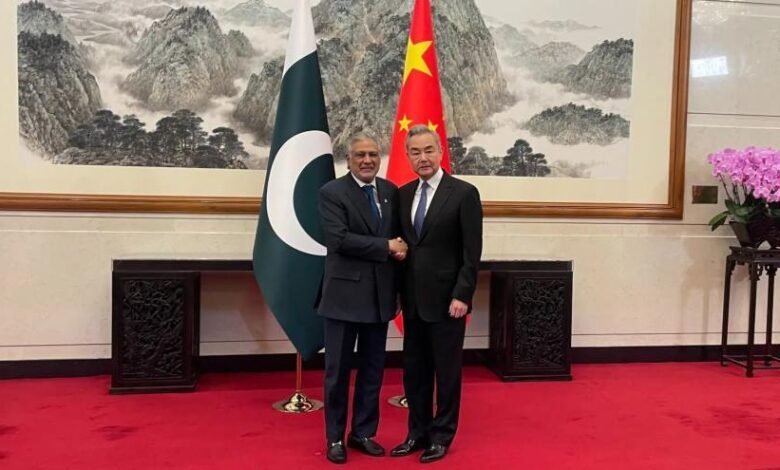
Pakistan’s Foreign Office issued an official statement outlining five principal points: an immediate halt to hostilities, commencement of peace negotiations, safeguarding of civilians and non-military infrastructure, security of maritime routes, and adherence to the supremacy of the United Nations Charter.
Prompt termination of hostilities
The initial point underscores the imperative to cease military operations and guarantee that humanitarian aid is delivered to all impacted areas. Both nations emphasized that averting the escalation of the conflict is vital, highlighting the necessity of safeguarding civilians and delivering assistance to war-affected regions.
The statement stressed the necessity of an immediate suspension of hostilities and the utmost measures to prevent the escalation of the conflict. “Humanitarian aid must be permitted in all conflict-affected regions without impediment.”
Commencement of peace negotiations
China and Pakistan urged the prompt initiation of peace negotiations, emphasizing that dialogue and diplomacy are the sole effective means for conflict resolution. The statement emphasized that the sovereignty, territorial integrity, national independence, and security of Iran and Gulf states must be upheld throughout these conversations.
“China and Pakistan endorse the pertinent parties in commencing negotiations, with all involved committing to a peaceful resolution of conflicts and abstaining from the use or threat of force during the discussions,” the statement said.
The Chinese foreign ministry characterized the initiation of peace negotiations in the crisis as arduous yet essential for reinstating regional calm and ensuring normal transit through the strategically significant Strait of Hormuz.
Safeguarding of citizens and infrastructure
The third aspect of the project emphasized the safeguarding of civilians and compliance with International Humanitarian Law. Both states implored all sides engaged in the conflict to promptly cease assaults on civilians and non-military objectives, encompassing essential infrastructure like as energy facilities, desalination plants, power grids, and peaceful nuclear sites.
The statement emphasized that the ideal of safeguarding people during military combat must be upheld at all times.
Protection of maritime routes
The Strait of Hormuz, an essential worldwide shipping route for commodities and oil, continues to be a significant issue. China and Pakistan advocated for the secure transit of civilian and commercial vessels, the safeguarding of crew members, and the reinstatement of standard shipping operations in the Strait.
The Strait of Hormuz and its surrounding waters constitute a significant global shipping corridor. The statement asserted that parties must safeguard the security of vessels and personnel, facilitate safe passage, and promptly restore normal navigation.
Supremacy of the United Nations Charter
The initiative underscored the necessity for a multilateral approach, emphasizing the supremacy of the United Nations and international law. Both nations advocated for joint initiatives to create an all-encompassing peace framework designed to attain enduring stability in the region.
“China and Pakistan advocate for the implementation of authentic multilateralism, the reinforcement of the United Nations’ authority, and the endorsement of a comprehensive peace framework grounded in the objectives and principles of the UN Charter and international law,” the statement indicated.
Ishaq Dar in Beijing
Earlier today, China affirmed its intention to bolster collaboration with Pakistan about issues related to Iran. Mao Ning, spokesperson for the Chinese foreign ministry, characterized the two nations as “all-weather strategic partners,” emphasizing the significance of collaborative strategic communication and the promotion of peace.
Senator Ishaq Dar landed in Beijing late Tuesday afternoon, where he was welcomed by senior officials before engaging in a bilateral discussion with Minister Wang Yi at the Diaoytai State Guest House. This signifies Dar’s second formal visit to Beijing in 2026, illustrating the continuous close collaboration and regular dialogue between Islamabad and Beijing over regional trends and international matters.
Reza Amiri Moghadam, Iran’s Ambassador to Pakistan, commended Islamabad’s diplomatic endeavors, characterizing them as proactive measures rooted in goodwill aimed at reinstating peace and stability in the area. The ambassador emphasized Pakistan’s role in supporting talks to cease US-Israeli military hostility.
The envoy’s declaration came after a quadrilateral meeting convened by Pakistan over the weekend, involving Saudi Arabia, Türkiye, and Egypt. The session, attended by foreign ministers from the respective nations, underscored the necessity for de-escalation, diplomacy, and organized conversations between Washington and Tehran.
In public statements, Dar suggested that Pakistan would facilitate direct US-Iran discussions in the near future, establishing Islamabad as a prospective location for high-level conversations. Officials revealed that the strategy entails organized indirect interactions between Washington and Tehran, rather than direct communication, with Pakistan collaborating closely with Riyadh, Ankara, and Cairo.
The visit and collaborative project emphasize the strategic connection between Pakistan and China, characterized by authorities as “all-weather,” with ongoing cooperation on regional peace, security, and development. In previous contacts, Wang Yi recognized Pakistan’s positive contribution to fostering stability and de-escalation in the Middle East crisis, highlighting the significance of Islamabad’s mediation in alleviating tensions and safeguarding essential shipping routes.