Pakistan asks the IMF to lower its revenue target by Rs. 200 billion.
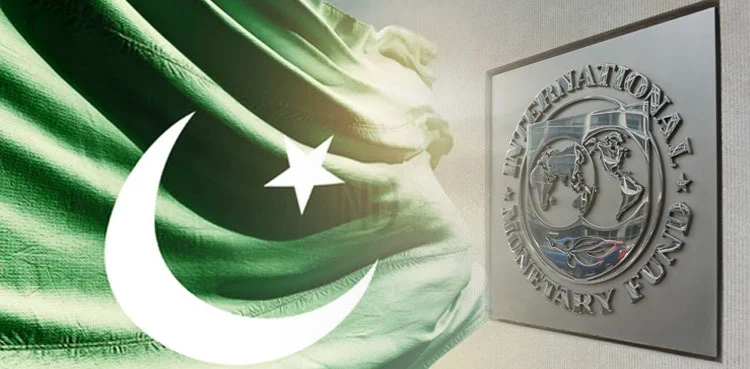
Pakistan is seeking a reduction of Rs200 billion in its tax collection target from the International Monetary Fund (IMF), citing restricted economic activity prompted by global oil supply disruptions following the US-Israel attack on Iran.
In order to address persistent economic difficulties and aid the populace, Prime Minister Shehbaz Sharif announced a broad range of austerity measures at the federal and provincial levels. Ambulances and public transportation buses are excluded from the new regulations, which call for all government departments to cut their use of gasoline for official vehicles by 50% over the course of the next two months.
The last session of virtual talks with the IMF is set for today, according to sources. The Ministry of Finance will advocate for maximal alleviation during the negotiations as instructed by the Prime Minister.
The government’s efforts, according to officials, would concentrate on lowering the tax collection target by Rs200 billion because the Middle East conflict may have a detrimental effect on revenue.
According to reports, the IMF has requested late payment surcharges on super tax collected after the deadline of Rs214 billion. By June 30, 2026, the FBR hopes to have recovered the maximum super tax.
According to insiders, there is a good chance that the IMF would approve the government’s request for income tax relief for salaried taxpayers.
Pakistan had already told the IMF that limited economic activity might cause it to fall short of its tax revenue objective.
Sources claim that during virtual discussions, including a special economic session centered on the effects of the regional crisis on the nation’s economy, Pakistani authorities briefed the IMF.
The government may find it challenging to meet its tax collection goal if steps are adopted to restrict economic activity in reaction to the crisis, officials informed the IMF.
Despite the pressure, the government remains committed to maintaining economic stability and moving closer to its growth targets, the sources added.
Pakistan also informed the IMF that the country’s economic growth rate is now expected to remain around 4 percent, slightly below the earlier projection of 4.2 percent.
Officials also cautioned that the impact of Middle East tensions on international energy markets may cause inflation to surpass the target, with prices expected to climb to about 7.8 percent instead of the previously estimated 7.5 percent.
Despite the persistent regional unpredictability, Pakistan expressed optimism that it will still be able to meet its objective for remittance inflows from Pakistanis living abroad.