Pakistan considers space-based surveillance to promote port expansion and maritime safety.
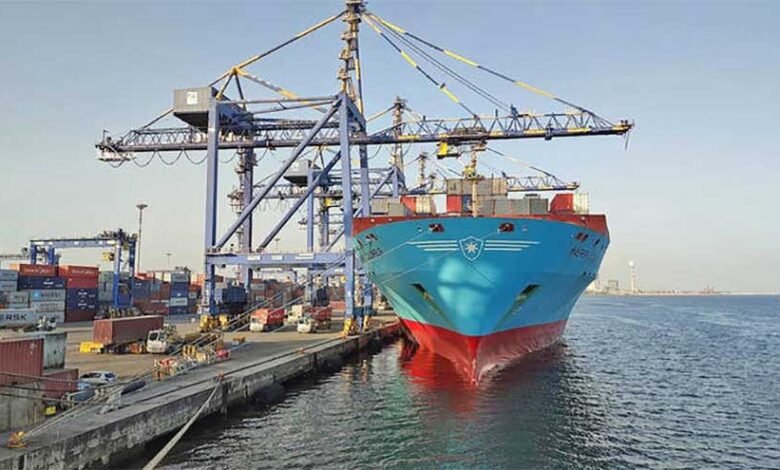
Pakistan is looking into using space-based monitoring technologies to help with port expansion, maritime safety, and environmental protection, according to the country’s maritime affairs minister, who was visiting the national space agency’s headquarters on Wednesday.
The visit comes as Islamabad aims to establish itself as a transshipment hub by improving cargo handling, easing import and export processes, and providing landlocked Central Asian governments with trade gateways through its southern ports on the Arabian Sea.
“Advanced space-based monitoring systems can play a vital role in safeguarding seas, improving maritime management, and strengthening responses to environmental threats,” marine Affairs Minister Muhammad Junaid Anwar Chaudhry said in a statement issued during his visit.
Chaudhry was informed on satellite-based studies that identify prospective additional port sites, as well as methods for monitoring maritime traffic and responding to disasters.
Pakistan has been attempting to expand and upgrade its port infrastructure in order to increase efficiency and attract regional cargo flows, especially as it attempts to improve connectivity along its Arabian Sea coastline.
During the visit, officials from Pakistan’s Space and Upper Atmosphere Research Commission (SUPARCO) discussed the use of high-resolution satellite imagery, artificial intelligence, and digital modeling to monitor ports, track cargo dwell time, detect oil spills, and support search-and-rescue operations at sea.
“We can benefit from continuous monitoring of coastal ecosystems to assess water quality, sediment dispersion, and overall environmental health,” Chaudhry stated, emphasizing the need of data-driven approaches in maritime planning.
He also emphasized the mounting hazards posed by climate change, including as rising sea levels, coastal erosion, and extreme weather events, and stated that greater collaboration between maritime authorities and scientific institutions was required to preserve coastal communities and infrastructure.
SUPARCO officials stated that the agency was prepared to develop artificial intelligence-based solutions for ports and maritime operations, including systems to eliminate customs inefficiencies and improve emergency response times.
The minister stated that the ministry and SUPARCO would formalize cooperation by establishing a systematic framework to promote collaborative activities.