Pakistan demands that the UN Charter be put into effect in order to avoid wars.
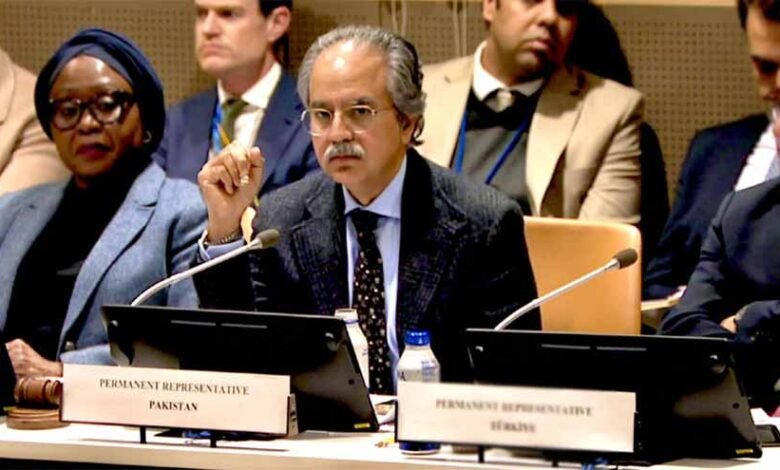
Ambassador Asim Iftikhar Ahmad, Pakistan’s Permanent Representative to the UN, has urged the UN Charter to be used equitably, consistently, and effectively in order to avert wars and settle disagreements amicably.
He was giving a speech at a high-level conference called “The UN Charter at 80: Conflict Prevention and Resolution,” which was organised by the Permanent Mission of Pakistan in association with Global Peace Chain, a nonprofit organisation that promotes peace and youth empowerment.
According to Asim Iftikhar Ahmad, there is no need to recreate the Charter. Over the past eight decades, its advice has remained relevant. The way we put it into effect, he argued, needs to be rethought.
Pakistan’s envoy informs the UNSC emergency session on Iran that the UN Charter forbids the use of force.
According to the ambassador, the UN Charter’s legitimacy is eventually put to the test when it comes to resolving long-standing conflicts, especially when political sensitivities are strong but moral and legal clarity are obvious.
He stated that the Jammu and Kashmir conflict might have been a successful illustration of the implementation of Charter provisions for pacific dispute settlement, citing the situations of Palestine and Jammu and Kashmir as two of the most glaring examples.
Other speakers, including academics, civil society representatives, and permanent representatives, reiterated the UN Charter’s ongoing significance, characterising it as a pillar of global peace and security, especially its Chapter VI provisions on peaceful dispute resolution.