The dollar is poised for its most unfavorable week in a year, as the yen faces pressure in anticipation of the Bank of Japan’s actions.
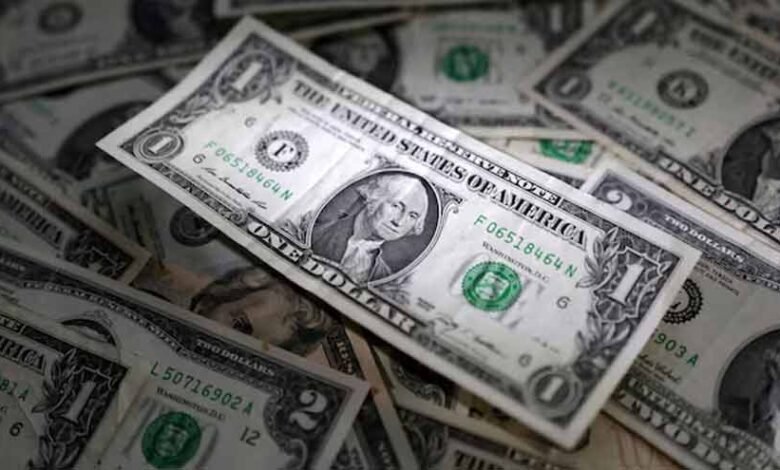
The U.S. dollar was set for its most significant weekly decline in a year following President Donald Trump’s threats over Greenland and his sudden reversal, which unsettled investors, while the yen fluctuated near one-week lows in anticipation of the Bank of Japan’s policy announcement later on Friday.
This week, the evolving geopolitical situation has influenced sentiment, as Trump announced he had obtained U.S. access to Greenland through a NATO agreement, while simultaneously retracting tariff threats against Europe and dismissing the option of forcibly acquiring the autonomous territory of Denmark.
The dollar has suffered significantly from investor anxiety in the currency markets as U.S. assets were severely impacted at the beginning of the week due to escalating geopolitical concerns.
The dollar index, which evaluates the U.S. currency against six currencies, stood at 98.329 after a decline of 0.58% in the prior session, trending towards a 1% decrease, marking its most significant decline in a week since January 2025.
The euro remained stable at $1.1751, close to the three-week peak it reached earlier this week, while sterling traded at $1.3496, near a two-week high achieved in the prior session.
Thierry Wizman, global FX and rates strategist at Macquarie Group, stated that although a Greenland agreement addresses the immediate concerns of tariffs and incursion, it fails to resolve the fundamental issue of the apparent estrangement among allies.
“This is an unfavorable position for maintaining the USD’s status as a reserve currency.”
PREPARATIONS UNDERWAY FOR BOJ, UEDA
On Friday, investors will concentrate on the BOJ’s decision, as the central bank is widely anticipated to maintain steady rates following its increase of the policy interest rate to a 30-year high last month.
Attention will focus on remarks from Governor Kazuo Ueda to ascertain the timing of the next interest rate increase and to see if there is a hawkish inclination among officials to bolster the weakened yen.
Since Sanae Takaichi assumed the role of Japan’s prime minister in October, the yen has under persistent pressure, declining more than 4% due to budgetary apprehensions and approaching thresholds that have elicited verbal admonitions and concerns of intervention.
It fluctuated at 158.50 per U.S. dollar during early Asian hours and was poised for a fourth consecutive weekly decline, a streak last observed in September. Traders are apprehensive that a breach over 160 may compel Tokyo to intervene in the currency market to bolster the yen.
Magdalene Teo, head of fixed income research for Asia at Julius Baer, stated that the yen is persistently being sold as investors are concerned that the BOJ’s monetary policy remains excessively supportive amid rising inflation risks.
“Sustainable appreciation of the JPY necessitates substantial domestic investment and a robust confidence that Takaichi’s administrative policies will ultimately result in growth and fiscal stability, rather than a downturn.”
Data released on Friday indicated that Japan’s core consumer inflation decelerated in the year ending December, yet remained above the central bank’s 2% target, sustaining market anticipations of further interest rate increases.
This week’s bond market turmoil highlighted investor anxiety on Japan’s fiscal situation, as Takaichi announced a quick election and pledged tax reductions, resulting in Japanese government bond yields reaching unprecedented levels.
Carol Lye, portfolio manager at Brandywine Global, stated that the authorities must devise a more definitive approach. “In the absence of action, it remains merely rhetoric.” It will not stabilize the market.
Until then, I believe there remains potential for the JGBs across the entire curve to maintain volatility. The rate increases are not occurring rapidly enough.
The Australian dollar remained stable at $0.6841, whilst the New Zealand dollar depreciated by 0.25% to $0.5914.
Bitcoin increased by 0.37% to $89,518.13, moving away from the weekly low it reached earlier this week.