The government will borrow $1 billion for changes.
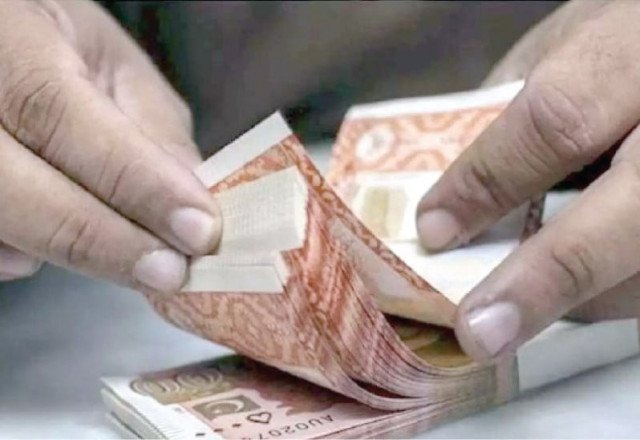
Pakistan has decided to take out two foreign loans worth $1 billion to make the tax system more efficient, make sure that expenses are properly accounted for, and make sure that state-owned enterprises follow the law. These goals require a willingness to improve, not new loans.
Official papers show that the country has asked the World Bank for a $600 million loan for the “Pakistan Public Resources for Inclusive Development” program and the Asian Development Bank (ADB) for a $400 million loan for the “Accelerating State-Owned Enterprise Transformation Programme.”
At the current exchange rate, $1 billion is worth an unbelievable Rs281 billion, which is enough to build an airport or hundreds of schools.
The loans will be used to help the budget and protect the country’s foreign exchange reserves. The new foreign loans won’t create any assets, according to the details of these loans that are still being negotiated.
The development goes against a plan put forward by Syed Naveed Qamar, who is in charge of the National Assembly’s Standing Committee on Finance. This week, Qamar asked Parliament to approve foreign debt deals so that lending facilities would be more open and better used.
Sources say that the Ministry of Finance has suggested getting these loans to help the budget and protect foreign exchange reserves. The International Monetary Fund (IMF) has not yet opened up major foreign lending, which is different from the past. This made the central bank have to buy $8.4 billion from the local market last fiscal year.
Budget support loans are not given out to help people make things. Money is given out after the agreed-upon actions, which are mostly changes to laws and policies, are done.
Sources say that the $600 million loan from the World Bank will be used to make “reforms” in the Federal Board of Revenue (FBR), the Finance Division, the Pakistan Bureau of Statistics (PBS), the Ministry of Commerce, the Power Division, the Ministry of Information Technology, the Pakistan Procurement Regulatory Authority (PPRA), and the Office of the Accountant General Pakistan Revenue (AGPR).
$560 million of the $600 million will be given out only if certain goals are met. One of these is raising the income tax share of all taxes to 55% over the next five years. The current ratio is below 50%. To make sure that tranche payments go smoothly, these kinds of goals are usually set low.
The government’s official reason is that Pakistan’s human capital outcomes, such as high stunting, learning poverty, and infant mortality, are the result of chronic underinvestment and inefficient public spending caused by a strict, deficit-prone fiscal framework.
The official position is that the $600 million program will directly address these structural problems, allowing Pakistan to finance inclusive development in a way that lasts and meet its national goals.
Officials said that the Finance Division and the World Bank were working out the last details of the loan package.
The goal of the program is to make the tax system stronger so that it can support macroeconomic stability and service delivery. This will be done by “more efficient and effective revenue collection, stronger allocation, efficiency and accountability in expenditures, and a better statistical data landscape for policymaking.”
Last month, The Express Tribune said that there was a shocking $30 billion difference in the import numbers that different government agencies reported over the course of five years.
According to the documents, PBS will benefit from technical help, better systems, and capacity building to give policymakers timely, accurate data.
The money from the loan is also being used to strengthen the Tax Policy Unit, the Debt Management Office, the government’s rightsizing, and open budgeting.
The World Bank and ADB have given money to these offices in the past, though. There is still a lot to do, which shows that these institutions need better governance more than money.
Sources said that the FBR had already said it wanted to use World Bank money to buy weapons for civil armed forces, especially Customs Enforcement. But the World Bank didn’t agree. The FBR may suggest again that “equipment and weapons needed by civil armed forces” be included in the new lending envelope.
However, sources say that the Planning Commission has problems with the new $600 million plan. It said that FBR and AGPR had already taken out loans from other countries. The new plan overlaps with existing lending programs, such as the Pakistan Raise Revenue Program for FBR, which is worth $450 million, and the Implementation of Online Billing solution (SEHAL) for AGPR.
Loan from ADB
According to sources, the government is also looking for a $400 million loan from ADB for the Accelerating State-Owned Enterprise Transformation Program.
The ADB package is meant to help 40 of Pakistan’s commercial state-owned enterprises deal with important problems with corporate governance and business performance.
ADB has already given hundreds of millions of dollars to packages that will help improve governance and the SOEs framework in Pakistan.
This week, the Sustainable Development Policy Institute (SDPI) held a seminar where the heads of the United Nations Development Programme and the IMF talked about how better governance would lead to better service delivery.
The IMF has also said that it will only approve the third $1 billion loan under the Extended Fund Facility if the Governance and Corruption Diagnostic Assessment report is made public.
Sources said that the new loan helps with governance problems by making 40 SOEs more efficient, financially stable, and productive. The National Highway Authority (NHA) is one of the SOEs that will benefit the most from this.
The new facility’s stated goals include improving NHA’s financial and operational performance, strengthening governance and compliance with the SOE Act and policy, and increasing the institution’s ability to oversee and monitor. The Central Monitoring Unit and line ministries don’t have enough resources to do systematic monitoring and hold people accountable.