The Red Cross wants the situation between Afghanistan and Pakistan to “de-escalate.”
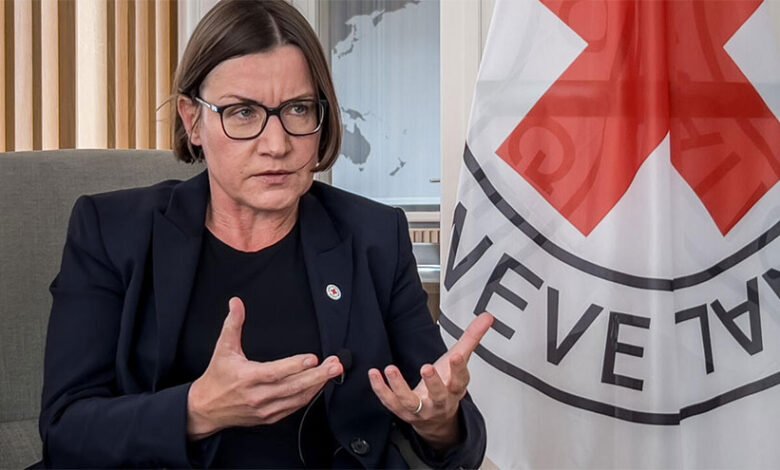
The president of the International Committee of the Red Cross urged on Friday for a reduction in hostilities between Afghanistan and Pakistan, emphasizing the necessity of civilian protection and guaranteed access to healthcare.
On Friday, Pakistan bombarded significant towns in Afghanistan, including the capital, Kabul, as Islamabad’s defense minister announced that the two nations are in a state of “open war” after months of reciprocal hostilities.ICRC President Mirjana Spoljaric stated, “We are observing a significant intensification of hostilities between Afghanistan and Pakistan,” urging for “restraint and de-escalation.”
She emphasized that the increase in violence was adversely affecting individuals in a region that had “already suffered decades of conflict, displacement, and loss”.She stated that they had witnessed and experienced the effects of conflict on their loved ones within their communities.
Pakistan’s recent operation followed an assault by Afghan forces on Pakistani border troops on Thursday night, in response to prior airstrikes conducted by Islamabad.
Islamabad charges Afghanistan with inaction against militant factions responsible for assaults in Pakistan, a claim the Taliban authority refutes.
Spoljaric emphasized that international law mandates the protection of “civilians, the wounded, and others who are not or are no longer engaged in hostilities.”Humanitarian aid must be provided to all impacted individuals, hospitals must function, and access to key services must be ensured,” she stated.The head of the ICRC, the custodian of the Geneva Conventions, asserted, “These are not privileges.”These are duties mandated by international humanitarian law.
Spoljaric stated that her organization was “formulating an operational response to humanitarian needs on the ground,” in collaboration with the Afghan and Pakistan Red Crescent societies and governmental officials.She stated, “The emphasis on both sides of the border is now to assist healthcare facilities caring for individuals injured by hostilities.”
She emphasized, however, that “no humanitarian response can substitute for the political will to adhere to the rules of war and prioritize de-escalation.”