The Supreme Court prohibits caste and conversion classifications in police records and shortens the life sentence to 15 years.
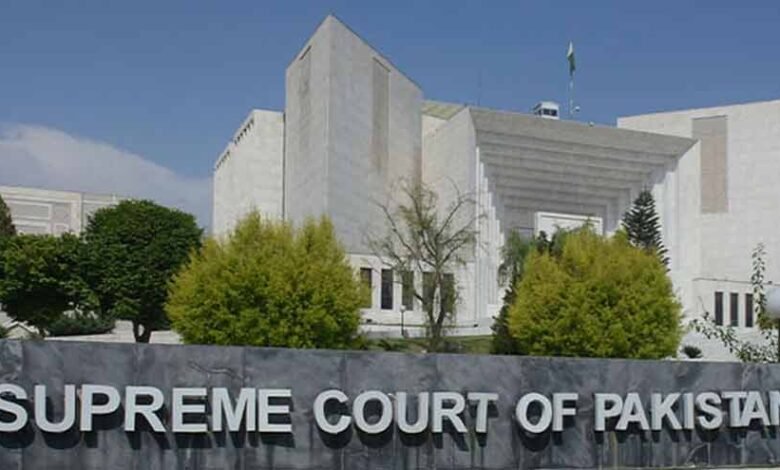
In a historic decision, the Supreme Court established detailed rules controlling the use of private data in police files and lowered the life sentence for a murder conviction to 15 years.
The verdict in the murder case was issued by a three-judge panel that included Justices Hashim Kakar, Salahuddin Panhwar, and Ishtiaq Ibrahim. The author of the ruling was Justice Hashim Kakar.
The Supreme Court ruled in its comprehensive ruling that conversion to Islam does not alter a person’s standing or dignity.
The court emphasized that human dignity is a fundamental right that every person has and that it is illegal to label someone as “new” or “separate” based solely on their religious conversion.
The bench noted that disparaging labels like “Bhangi,” “Choora,” and “Masali” are used to disparage people rather than identify caste.
It bemoaned the fact that society frequently gauges regard for people based on their line of work rather than their innate dignity.
The court decided that it is a moral shortcoming to regard those who make cities habitable as less than human.
It emphasized that everyone, regardless of occupation, has the legal and social right to equality, respect, and dignity.
The ruling stated that while Article 26 of the Constitution forbids discrimination on the grounds of gender, race, religion, or caste, Article 25 of the Constitution ensures that all individuals have equal protection under the law.
The Supreme Court ordered all provinces’ Inspectors General of Police (IGs) and the Islamabad Police to make sure that no reference to caste, community, tribal identification, or religious conversion appears in charge sheets, arrest notes, recovery reports, or First Information Reports (FIRs).
The court also mandated that police records refrain from using disparaging language or mentioning someone’s conversion status.
Only when the investigating officer presents written and convincing arguments supporting its applicability to the case may caste be brought up.
The case history states that Muhammad Tufail was murdered in October 2004 by the convicted individual, Arshad, also known as Billu.
The Lahore High Court later modified the death sentence that the trial court had given him to life in jail.
The court emphasized in its ruling that discrimination of any kind is intolerable and that every person is entitled to equal rights under the Constitution and the law.