Balochistan government performance in 2025: Advancements, shortcomings, and future directions
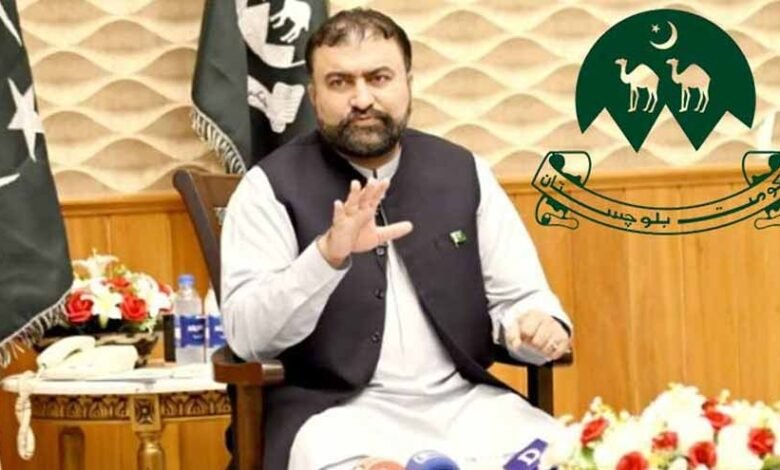
As 2025 comes to an end, the Balochistani government’s overall record is a combination of significant accomplishments, important efforts, and sluggish growth in other areas.
The provincial administration implemented a number of policies throughout the year in the areas of social welfare, employment, transportation, education, urban development, and agriculture, many of which have started to affect the socioeconomic climate of the province.
In the transportation sector, the government added 12 additional buses to Quetta’s Green Bus Project. A unique Pink Bus service with five buses was also introduced to provide safer travel for women, and it was well received by the public. Major roads were enlarged, illegal parking was eliminated, traffic flow was improved, and the city’s overall beauty was improved as part of the Quetta Development Plan.
Illegal commerce decreased as a result of law enforcement authorities stepping up their efforts to stop smuggling in and around Quetta, which resulted in the seizure of illicit items and legal action against those involved.
One of the best-performing industries was still education. A budget of Rs32 billion was set aside for scholarships for almost a million students, teacher wages, and school upgrades. Over 2,000 absentee teachers were fired, 3,200 closed schools were reopened, and the Benazir Scholarship Program introduced international scholarships, including Oxford University placements.
Children of workers, martyrs, minorities, and the LGBTQ community also received educational assistance, and programs like the Book Van Project and an Early Warning System assisted in lowering dropout rates.
A Youth Resource Centre was created and the Flying Club was resurrected to encourage youth employment and skill development. While the distribution of tractors and other equipment was still delayed, efforts to convert fields and orchards to solar energy continued in agriculture.
The communication and health sectors saw slower progress, with a number of assigned projects still unfinished. In terms of welfare, the National Climate Change Strategy was finished and BISP payments were raised by 27%.
All things considered, 2025 may be characterised as a somewhat successful year for the Balochistani administration, with notable advancements in social welfare, education, urbanisation, and transportation, as well as setbacks in infrastructure, agriculture, and health that underscored the need for better planning and governance.