Global shipping is constrained by the Strait of Hormuz deadlock.
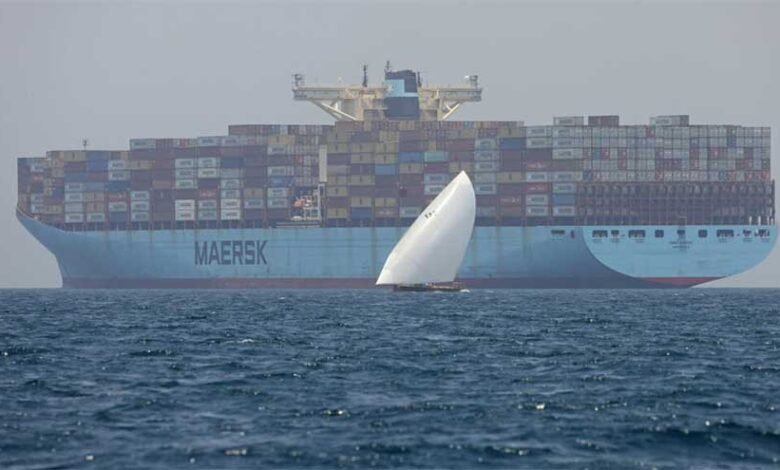
Companies will have to conduct business without one of the most important shipping lanes in the world, particularly for oil and gas, since few captains are ready to face the Strait of Hormuz as conflict rages around the Gulf.
How significant is the strait to global markets?
About 20% of the world’s seaborne oil passes through the strait, making it particularly important to the global energy markets.
However, with the Gulf ending in a dead end between the coastlines of Kuwait, Iraq, and Iran, analysts think that blocking access, as Iran has threatened to do, won’t have an impact on the main maritime route between Asia and Europe.
However, because it provides access to Dubai’s Jebel Ali port, the tenth-largest container port in the world and a redistribution hub for over a dozen countries in the area, the strait is crucial to all regional trade.
According to Anne-Sophie Fribourg, vice-president of France’s TLF freighters union, container ships in Jebel Ali are emptied onto smaller ships that are headed for nations ranging from east Africa to India.
Was it ever closed?
There has always been commerce over the Strait of Hormuz.
According to Paul Tourret, director of the French High Institute for Maritime Economy, commercial transit was maintained even during the 1980–1988 Iran–Iraq conflict, in spite of attacks on oil tankers.
According to Cyrille Poirier-Coutansais, research director at the French Navy’s Strategic Studies Centre, the present “freeze” on cargo passing through the strait is “unprecedented.”
The biggest shipping companies in the world, including the Italian-Swiss MSC, Denmark’s Maersk, France’s CMA CGM, Germany’s Hapaq Lloyd, and China’s Cosco, have instructed their ships to seek shelter and remain safe since Israel and the US began attacking Iran on Saturday.
Clusters of ships, mostly tankers, are anchored off the coast near Dubai and far to the north near Kuwait, according to the Marine Traffic map, which monitors global shipping movements.
On the opposite side of the strait, off the Iranian port of Bandar Abbas, is the Iranian merchant navy.
Just before the entrance to Hormuz, there are a number of other discrete ship groups visible, according to Tourret.
What products pass via Hormuz?
While France mostly offers grains and agricultural products, cosmetics, luxury goods, and pharmaceuticals, Germany uses the strait to convey automobiles, machinery, and industrial items.
According to Fribourg of TLF, Italy exports a lot of marble, pottery, and food.
On the other hand, according to TD Commodities, the Middle East produces 9% of the world’s primary aluminum, almost all of which is exported, in addition to oil and gas, which are used to make fertilizers and plastics.
Are there going to be delays? Price hikes?
A number of e-commerce sites have alerted their customers about the possibility of longer delivery periods.
According to Bloomberg, Amazon predicts significantly lengthier wait times, while Temu and Shein have warned of delays of several days.
The increased fees shipping companies are charging for transit in the area are already driving up freight rates.
Ships are also avoiding the Red Sea and the Suez Canal on the Europe-Asia route because of concerns about retaliatory assaults by the Houthis, Iran’s proxies in Yemen.
It takes about 10 extra days at sea and costs about 30% more to round the Cape of Good Hope, which is at the point of South Africa.