Experts for integrated economic governance to overcome crisis
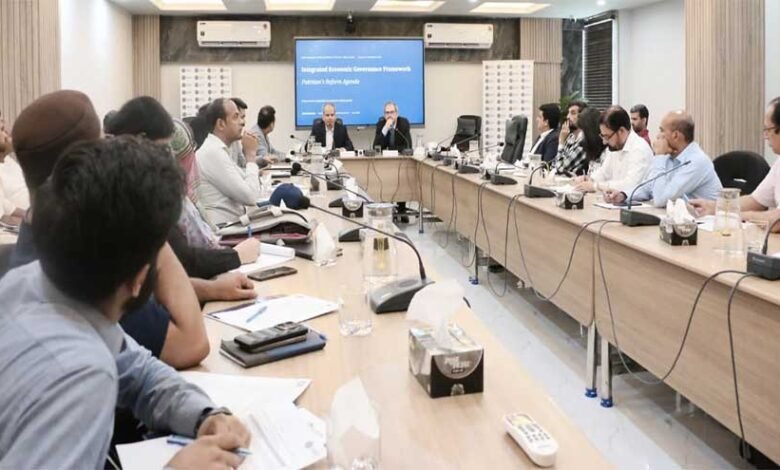
Policy experts at a consultation have underscored the necessity for an integrated economic governance framework to help Pakistan escape recurring economic instability cycles, asserting that consistent growth would be achievable only through policy coherence, institutional coordination, and long-term reforms.
A consultation on “Pakistan’s Reform Agenda for Integrated Economic Governance” was co-organised by Sustainable Development Policy Institute (SDPI) and Friedrich-Ebert-Stiftung (FES) here on Monday.
In his introductory remarks, SDPI Deputy Executive Director (Research) Dr Sajid Amin Javed remarked that Pakistan has achieved short-term macroeconomic stabilization many a time but has failed to sustain it.
Pakistan manages to attain stabilization but it loses it in about every third fiscal cycle, he said adding that the consultation was aimed at identifying policy actions that could ensure continuous and sustainable economic growth.
Senior Economist and academician Dr Aliya Hashmi said there is a need for clearly defined national growth targets backed by a holistic reform agenda, implementation framework and robust monitoring and evaluation procedures.
She warned that Pakistan needed to focus on creating productive employment opportunities for its fast rising youth population and that gains in GDP metrics alone would not offer real growth without quality job creation.
Dr Hashmi, who underlined the importance of expanding women’s engagement in the labour market, pointed out that the greater female employment has resulted in lower fertility rates and better economic outcomes in numerous nations of the region, including India.
Dr Muhammad Ali Talpur, Joint Chief Economist at the Ministry of Planning, said political instability, insufficient policy coordination and lack of continuity are important hurdles for efficient economic governance.
He endorsed SDPI’s diagnosis of Pakistan’s economic problems, saying the government had previously identified fundamental governance deficiencies and had taken 142 policy steps in 58 departments to solve them. He stated that major reforms had already been made in the form of separating tax policy from tax administration in the Federal Board of Revenue (FBR), which he said was a reflection of the government’s realisation of structural flaws.
Pakistan was still crippled by consistent internal and external deficits which had restricted economic policy making for decades, said Dr Talpur.
He said future reforms should focus on investment in human resources, increasing exports through deregulation and rationalisation of tariffs and improving export competitiveness.
The National Economic Council, as the highest planning body in the country with representation from federal and provincial governments, was well positioned to support coordinated national development planning and deepen integrated economic governance, he said.