Trump claims that in order to press for an Iran deal, the US will halt the Hormuz operation.
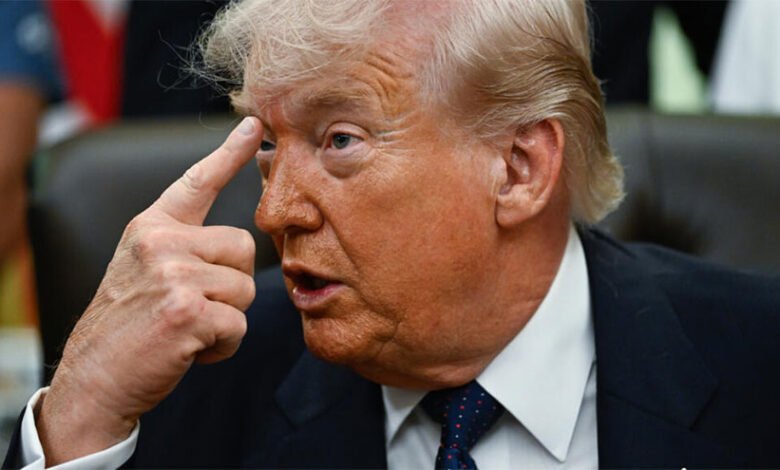
In an attempt to negotiate an agreement with Iran to end the Middle East conflict, US President Donald Trump announced on Tuesday, May 5, that he was ending the US military mission to escort ships through the Strait of Hormuz after just one day.
On Monday, Trump launched his “Project Freedom” initiative to assist ships in escaping the Strait of Hormuz, the small chokepoint to the Gulf where Iran has taken control after being attacked.
However, the US president stated on Truth Social that “great progress has been made toward a complete and final agreement” with Tehran and that he was now stopping it at the request of mediator Pakistan and other nations.In order to determine whether or not the Agreement can be finished and signed, we have mutually decided that Project Freedom will be put on hold for a little period of time, while the blockade will continue to be in full force and effect,” Trump stated.
In an effort to put pressure on Iran to reach an agreement to terminate the war that the US and Israel started on February 28, Washington is continuing to blockade Iran’s ports.
With the US claiming to have sunk seven Iranian boats and multiple civilian vessels being attacked, reportedly by Iran, tensions over the Hormuz operation had been skyrocketing.
Secretary of State Marco Rubio stated earlier on Tuesday that the fighting in the Strait of Hormuz was not a part of the first conflict.This is a defensive operation, not an offensive one, according to Rubio. “And what that means is very simple – there’s no shooting unless we’re shot at first.”
“Operation Epic Fury” is the term given to the US’s offensive actions against Iran, he continued.
UN DECISION
Additionally, Rubio encouraged China and Russia to refrain from vetoing a US-proposed UN resolution calling on Iran to cease its attacks and the placement of mines in the Strait of Hormuz, calling it a test of the UN’s usefulness.
Members of the UN Security Council started private discussions on Tuesday regarding a text that the US drafted with Bahrain, Saudi Arabia, the United Arab Emirates, Kuwait, and Qatar. If the text is approved, it could result in sanctions against Iran and possibly authorise force if Tehran doesn’t stop attacks and threats to commercial shipping.
Last month, Russia and China used their vetoes in the 15-member Security Council to thwart a prior Bahraini resolution that was supported by the US and seemed to pave the way for US military action against Iran.
While acting under Chapter VII of the UN Charter, which permits the Security Council to implement measures ranging from sanctions to military action, the new draft avoids specific wording authorising force.”I don’t know if it will avoid a veto or not,” Rubio said to reporters during a White House news briefing. “Everyone wouldn’t want to see this vetoed again, and we’ve made some slight adjustments to the language.””I believe it’s a true test to the UN … as something that works,” he continued.
Iran is accused of violating the present ceasefire and of “continuing actions and threats aimed at closing, obstructing, tolling” freedom of navigation across the strait, according to a draft of the resolution that Reuters was able to view.
Iran must promptly stop attacking, reveal the locations of any mines, and refrain from obstructing clearance operations.Rubio stated, “All we’re asking them to do is condemn it, call on Iran to stop blowing up ships, remove these mines, and allow humanitarian relief to come through.”I have argued to both the Chinese and the Russians that it is in their best interests for that resolution to be passed and for pressure to be applied to Iran because they do not want international waterways, especially the Strait of Hormuz, to be closed off and cause economic chaos to dozens of nations worldwide.”
Citing the interruption of relief delivery, fertiliser shipments, and other necessities, the draft also urges Tehran to assist UN attempts to create a humanitarian corridor in the strait.
ASSESSING TEXT, SAYS CHINA
Although Russia and China are still considering a competing text, diplomats said Washington intends to wrap up talks swiftly, circulating a final copy by Friday and conducting a vote early next week.
China’s UN mission responded as follows when asked if the resolution may prevent another Chinese veto: “The draft was circulated yesterday in the afternoon.” Our assessment is currently ongoing.
The UN envoy from Russia did not react right away.
During a routine briefing, UN spokesperson Stephane Dujarric stated, “Obviously we want to see this international waterway open, open safely, and a restoration of the freedom of navigation that is so critical to the world.” However, he did not comment on drafts.
A proposal for a new global maritime coalition, the Maritime Freedom Construct (MFC), which aims to create a post-conflict security architecture for the Middle East and reopen the strait once conditions settle, has also been distributed by Washington, according to Reuters.
With Iranian cooperation, the MFC would collaborate with a separate Franco-British maritime mission of about 30 nations that aims to establish the framework for safe passage across the strait after the crisis is concluded or the situation stabilises.
Some states have said that before committing military resources to any action, a UN mandate would be necessary.