Iran says it caught US underwater drone in Strait of Hormuz
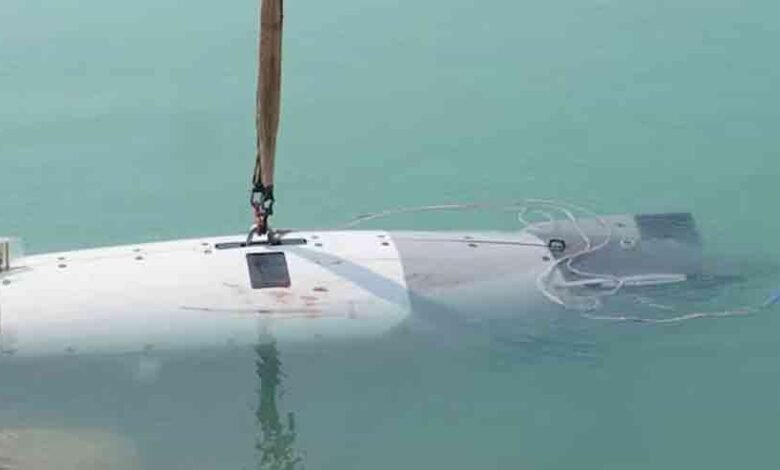
Iran’s Revolutionary Guards said on Tuesday it has captured a U.S. uncrewed submarine at the entrance to the Strait of Hormuz, offering a rare insight at how underwater drones are being used in military operations.
Iranian state media reported the craft was a Dive-LD, a large autonomous underwater vehicle made by California defense firm Anduril. The 19-foot (5.8-metre) submersible can carry out duties like mine countermeasures, seabed mapping, intelligence collection and the inspection of undersea infrastructure such as cables and pipelines, the business has said. “We detained one of the most advanced, clever and unmanned submarines of the terrorist American army near the entrance to the Strait of Hormuz. This submersible is equipped with the latest technologies,” the Revolutionary Guards Navy said in a statement broadcast by Iranian state media.
In response, a Pentagon spokesperson revealed a underwater drone had “malfunctioned more than a day ago.” “It was surveying regional seas in support of ongoing operations. The defective drone was an earlier model that neither collected sensitive data nor carried any classified sonar or radar technology,” the spokesperson stated.
Anduril confirmed the loss of one of its vessels, but minimized the seriousness of the incident. “Dive-LD is an attritable autonomous system, meaning it is built from the outset to operate in perilous conditions where loss of the vehicle is a predicted possibility,” a company representative stated.
The U.S. Navy is spending extensively in unmanned naval systems, including undersea and surface vehicles, as it seeks cheaper ways to monitor broad expanses of ocean, gather intelligence and track hostile ships and submarines without putting troops at danger.
According to Anduril’s website, Dive-LD can operate for up to 10 days without returning to base and is meant to dive to depths of as much as 6,000 metres (19,700 ft). Dive-LD units cost roughly $2.5 million each, U.S. military news site DefenseScoop reported in 2024.