After a divorce, LHC decides that women who have been harmed by their spouses get their dower.
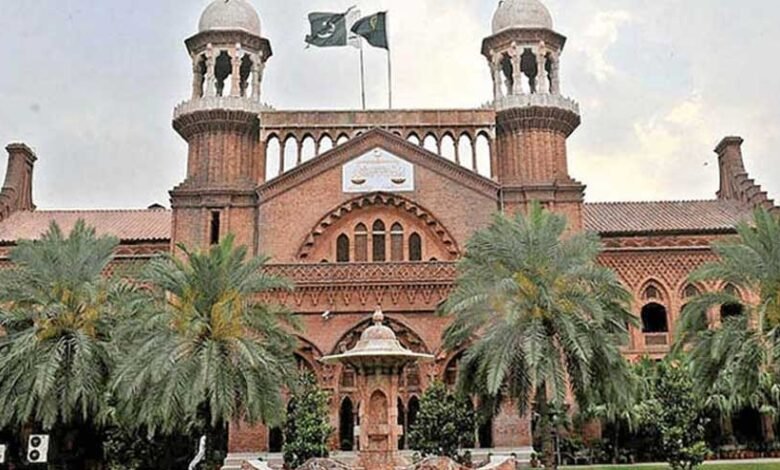
A woman who gets a divorce because of her husband’s abuse, cruelty, or other marital wrongdoing is not automatically denied her right to dower (haq mehr), according to a ruling by the Lahore High Court.
In a landmark ruling on khula, divorce, and dower rights, the court decided that each case’s facts define who is entitled to dower and that not all khula cases need the return of dower.
A appeal submitted by Arsalan contesting the rulings of the Family Court and the District Judge in Toba Tek Singh was dismissed at the preliminary hearing stage by Justice Mohsin Akhtar Kayani, who also gave the written verdict.
The petitioner claimed that the Federal Shariat Court had already ruled that sub-sections (5) and (6) of Section 10 of the Family Courts Act, 1964 were in conflict with Islamic injunctions and that the Supreme Court was still considering the case. He argued that the Family Court lacked the authority to give his ex-wife any share of the dower.
The ruling states that the pair was married on March 18, 2022, with an unpaid dower of Rs. 100,000.
Nisha Shahid, the wife, told the Family Court that after she insisted on receiving the dower, her husband started abusing her physically. She said that he was unemployed, frequently aggressive over trivial matters, addicted to drugs and larceny, demanded money from her parents, verbally abused her, threw her out of the house, neglected to pay maintenance, and never made an effort to make amends.
The District Judge rejected the husband’s appeal as unmaintainable, but the Family Court partially accepted her claim and granted her 50% of the postponed dower.
The High Court made a distinction between khula and judicial dissolution of marriage, noting that the question of returning the dower may come up if a woman seeks khula only because she no longer wants to be married. However, the wife retains her right to dower and the husband cannot demand its return if the marriage terminates due to the husband’s cruelty, violence, maltreatment, failure to give maintenance, or other legally recognized circumstances.
The court further ruled that psychological, emotional, verbal, and financial abuse are all considered forms of abuse in addition to physical violence. It further stated that a wife’s credible testimony and the circumstances surrounding the incident may be sufficient evidence, and that she is not have to provide a medical report or FIR for each incidence.
The ruling emphasized that merely classifying the divorce as khula does not automatically terminate the wife’s dower rights and instructed Family Courts to first ascertain the true cause of the marriage’s dissolution before resolving the dower issue.
In order to ensure that women are not denied dower in cases where the husband’s misconduct is proven, the Lahore High Court also suggested that the Punjab government and the Law and Justice Commission of Pakistan amend the law to require Family Courts to clearly determine responsibility for the breakdown of a marriage before deciding dower claims.
The Punjab Law Secretary and the Pakistani Law and Justice Commission were instructed by the court to receive copies of the ruling.