In six years, private investment will be cut in half.
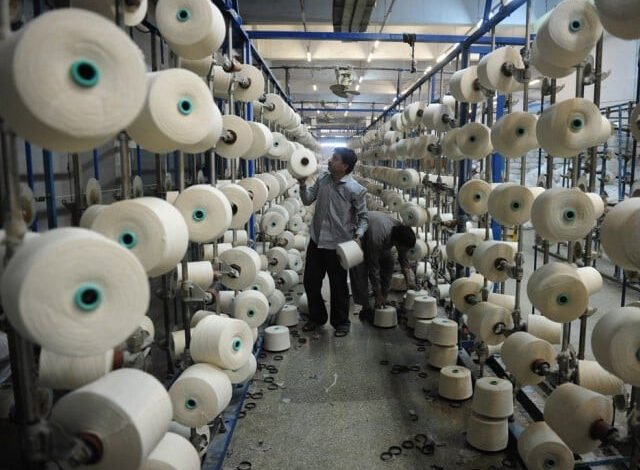
One of the most important slowdowns in Pakistan’s manufacturing sector in recent years is happening right now. This sector was once thought to be the backbone of the country’s economic growth and job creation. A sharp drop in private investment, which has fallen by more than 46% in the last six years, has alarmed businesspeople and economists who think that the slowdown in production and value addition could have long-term effects on the country’s growth path.
Ali Imran Asif, a Senior Executive Committee Member of the Lahore Chamber of Commerce and Industry (LCCI), says that private investment in manufacturing fell from Rs706 billion in the 2018-19 financial year to Rs377 billion in 2024-25. This shows that industrial growth is at its weakest point in over a decade.
He said that the current level of investment was not even enough to make up for the loss of value of machinery and other assets in large-scale industries. This could mean that the sector’s total productive capacity could go down. He warned, “We are not just going through a temporary downturn; our industrial base is eroding.” “Pakistan’s manufacturing will stay stuck in stagnation until the structural problems of competitiveness, productivity, and innovation are fixed.”
The drop in investment hasn’t happened all by itself. The manufacturing and mining sectors have only added 13.2% to the country’s GDP over the past six years.
Textiles, leather, and engineering goods are examples of export-oriented industries that have also had a hard time staying competitive around the world because of rising costs of production, changing currencies, and inconsistent government policies. In FY25, Pakistan’s large-scale manufacturing (LSM) output dropped by 1.5%. This came after a small rise of 0.92% in FY24.
India’s industrial growth in FY25 was 4%, while Bangladesh’s was 3.98% in FY24. This was thanks to strong policy support and a wider range of exports.
Economists say that high interest rates have made it harder to borrow money for growth, but the bigger problem is that investors don’t trust the government’s policies.
Asif said that the slowdown wasn’t just because of tighter money; it was also because manufacturing had been growing slowly and making less money for years. He said, “It’s that simple: when businesses don’t see demand, profitability, or stability, they don’t invest.” He called for a full plan to bring back the economy.
Dr. Shahid Saleem, an economic analyst, said that Pakistan’s industrial sector had been squeezed by two big problems: restrictions on imports and falling domestic demand. He said, “The government’s efforts to stabilize the currency and control the current account deficit have hurt industrial growth.” “When factories don’t run at full capacity, jobs go away, exports go down, and tax collection goes down. This affects every part of the economy.”
He went on to say that Pakistan’s regional competitors, like Vietnam and India, had aggressively pursued policies that were good for business, offering tax breaks and export rebates that Pakistan had not yet fully matched.
Experts say that the next national priority should be to bring back manufacturing, since inflation seems to be slowing down and the economy is becoming more stable. The sector not only helps the economy by exporting goods, but it also creates jobs for millions of people in cities and towns.
Still, they said that Pakistan’s manufacturing sector would only come back to life if it could effectively combine short-term stabilization with long-term industrial strategy. The country needs to rebuild investor confidence in order to stop the drop in investment.
Asif said, “Big businesses must once again be the engine of growth.” “This can only happen if the environment is right, energy prices are fair, and the government makes sure that policies stay the same.”