Lula, Brazil’s iconic working class president, wins fourth term in dramatic comeback
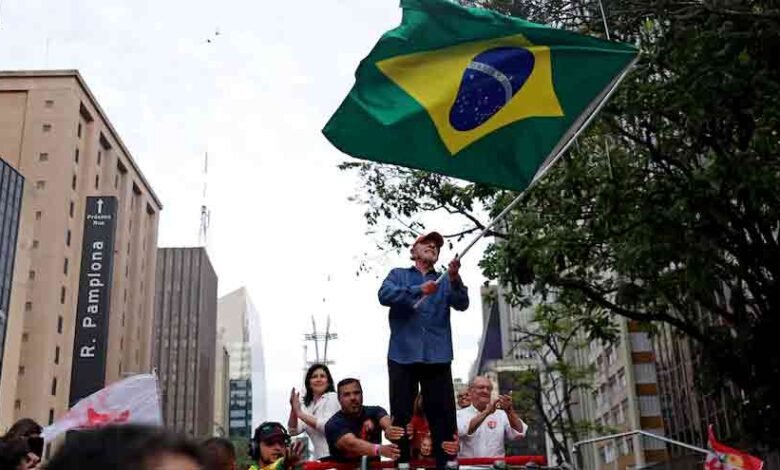
Brazil’s electoral court ruled Sunday that President Luiz Inacio Lula da Silva won a record fourth term in a surprising result that defied polls, precedent and worldwide anti-incumbent sentiment to put the brakes on a wave of right-wing election victories across Latin America.
Lula, an icon of the worldwide left and the most powerful force in Brazilian politics this century, defeated Senator Flavio Bolsonaro, the eldest son of former President Jair Bolsonaro.
The senator, who dominated the first round of the election but lost the runoff by more than 4 million votes, said he would try to overturn the result because of a Supreme Court judgement Sunday to prolong voting by two hours.
Bolsonaro’s refusal to acknowledge defeat parallels his father’s attitude after losing to Lula in 2022. Former President Jair Bolsonaro never conceded the election and was eventually convicted and sentenced to 27 years for organising a coup to stay in office.
But the size of Flavio Bolsonaro’s loss against Lula – more than double the margin of his father’s defeat – and the fact his campaign had asked for an extension because of rains in the south made an annulment implausible, observers said.
“There is a possibility of right-wing protests in the coming days, but it is very improbable that it will lead to the reversal of the result,” said Mario Braga, a Latin America analyst at risk consultancy RANE.
KING OF COME-BACKS
For Lula, his victory is just another comeback in a career full of them. The 80-year-old was incarcerated between 2018 and 2019 on corruption allegations that were later reversed, allowing him to defeat Jair Bolsonaro in the 2022 race.“He is a statesman, a giant,” socialist federal senator Erika Hilton, who was with Lula in Sao Paulo during the vote count, told Reuters.
At times, Lula’s reelection seemed unlikely as voters turned against him and his Workers’ Party amid years of corruption scandals and rising prices, while sweeping social changes left the former metalworker and union leader looking out of touch with an increasingly app-based economy and its growing ranks of informal workers.
An exchange-traded fund on Brazil’s Bovespa index (1325.T), opens new tab listed in Tokyo plummeted about 15% on news of Lula’s victory in Asia trade.
Pollsters reported more voters turned out to support Lula than they had anticipated. Leonardo Barreto, co-founder of consultancy Think Policy, said voters had opted for Lula’s familiar embrace over Bolsonaro’s innovation.“Today people are choosing between change, with some apprehension, and a known path which guarantees certain rights,” he remarked.
Lula referred to a record of lowering poverty and inequality throughout the campaign, while unemployment, illiteracy and deforestation achieved record lows during his third term.
He claimed Bolsonaro will decrease welfare expenditures, backslide on social advances and hand over Brazil’s sovereignty to US President Donald Trump, whose State Department supported a campaign to return the Bolsonaros back to power.
Lula’s victory is a big loss for Trump from a rising band of supportive right-wing Latin American governments that have accepted Washington’s agenda on security and migration.
“He would be very important for creating a point of balance in Latin America,” Reuters quoted Lula’s former foreign minister Celso Amorim as saying. Lula is that equilibrium.
LATE-CAMPAIGN BOOST.
Lula is the first candidate to come second in the first round and win since Brazil’s restoration to democracy in the 1980s.
Lula, president from 2003 to 2011, ran this year on a potent mix of pragmatism and populism that has defined his half-century career in national politics, putting out a number of policies aimed at improving the lives of workers and impoverished Brazilians.
These gained traction with late-campaign promises, from free statewide weekend public transit, which has to be formally filed to Congress, to a 15% boost in his signature welfare program that is being implemented.
Lula also pushed a constitutional amendment that turned into Brazil’s biggest labour reform in decades and approved with broad support in Congress.
THE CHALLENGES THAT LIE AHEAD
But Lula’s fourth term may be his toughest yet, after Brazil elected its most conservative Congress since the restoration to democracy in the 1980s.
Bolsonaro’s Liberal Party (PL) and associated parties would together be able to command more than 280 seats in the lower house and up to 50 seats in the Senate, enough for solid opposition majorities in both chambers.
That could strengthen recent patterns of presidents yielding power to Congress on the budget, major legislation and crucial nominations.
Lula faces an economy that his administration predicts will expand a feeble 2.3% next year, adding to fiscal difficulties linked to elevated interest rates and public debt that has soared above 82% of GDP, the highest level since the epidemic.
The president’s detractors blame expenditure, although most of the debt growth is due to higher borrowing prices.
Goldman Sachs said it expected Lula to make limited progress cutting spending in a fourth term, as he remains dedicated to a state-led economic strategy.
Rising household debt is also a worry for economists. To tackle the problem, Lula announced a temporary ban on internet betting and a new debt relief plan during the campaign.