NTSB chair calls on Congress to pass aviation safety bill
Jennifer Homendy, chair of the US National Transportation Safety Board (NTSB), has called on Congress to resolve a months-long legislative gridlock and adopt key modifications to aviation safety geared to prevent future midair collisions.
Homendy said the NTSB already has given lawmakers “a clear roadmap” to improve aviation safety and help prevent another catastrophic airborne disaster. Now, she said, it’s time for Congress to act on measures it promised months ago.
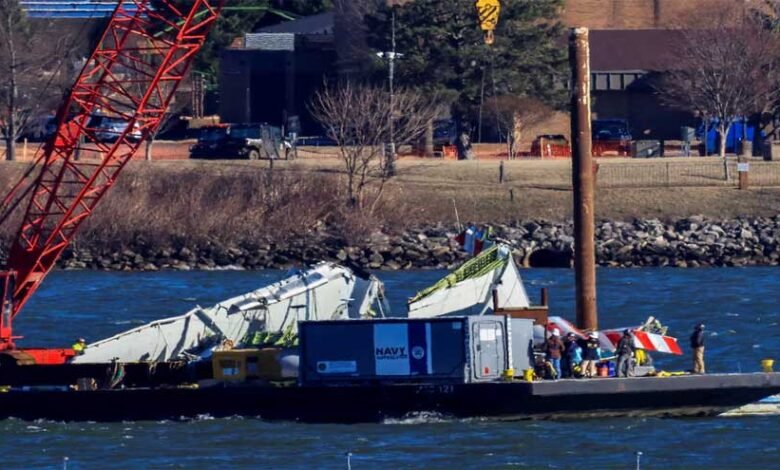
The request comes after an American Airlines regional flight crashed into a US Army helicopter outside Washington, DC in January 2025, killing 67 people in the biggest US aviation tragedy since 2001.
The US House of Representatives voted 396-10 in April to pass a sweeping plan to enhance aviation safety. The law contains dozens of recommendations that came out of the tragedy. A related legislation, the so-called ROTOR Act, cleared the Senate unanimously in December but failed to get the two-thirds support needed in the House under fast-track rules.
The NTSB said the 2025 crash in the congested airspace above the US capital may have been avoided if Automatic Dependent Surveillance-Broadcast (ADS-B) technology was in operation.
Earlier this year, the NTSB said the tragedy was caused by systematic flaws at the Federal Aviation Administration.
The House bill would require all U.S. military aircraft excluding fighter planes, bombers and drones to have collision-prevention technology by 2031. It also sets standards for collision avoidance systems on civilian airplanes and helicopters.
House and Senate members are still talking about ways to address disagreements between the dueling proposals.
Earlier this month, FAA Administrator Bryan Bedford told Reuters that the agency gave technical help to Congress during the legislative process. The FAA can proceed with greater use of ADS-B technology without clearance from Congress, he said, but would like clear direction from lawmakers.
The NTSB found that the 2025 accident was caused by the FAA’s decision to allow helicopters to operate near the airport without proper separation from commercial aircraft and its failure to review safety data and implement past recommendations to divert helicopter traffic from the airport.