Report: Pakistan 3rd Biggest Importer of Solar Panels in the World
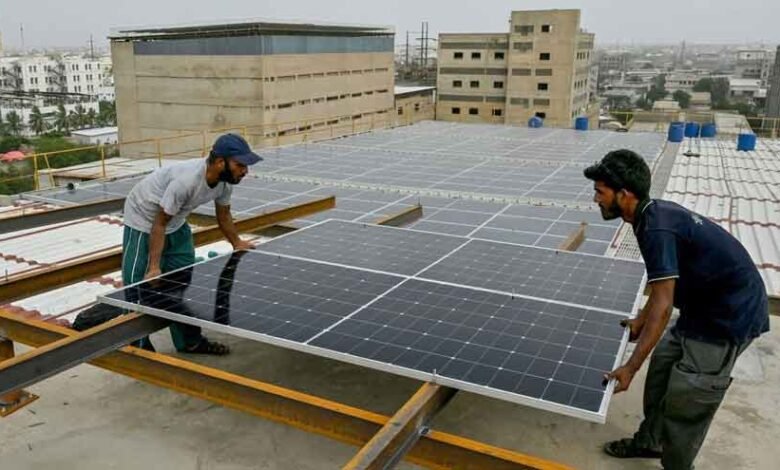
Pakistan has become the third largest importer of solar panels in the world after buying 17 gigawatts (GW) of solar power systems in 2024 as per the Pakistan Climate Prosperity Plan (CPP) jointly established by the Ministry of Finance and the Ministry of Climate Change.
Pakistan’s imports of solar products more than quadrupled from a year earlier, a jump that reflects a surge in demand as electricity tariffs climb and global prices for solar panels decrease, the report said.
The report sets out an ambitious plan for reforming the country’s energy industry with the goal of 60% clean energy by 2030, increasing the share of renewable sources to 50% of electricity output by 2035, and 95% renewable electricity generation by 2040.
It also aims to retire or convert 14,000 megawatts (MW) of fossil fuel power plants by 2035, cut transmission and distribution losses from 19% to 8%, ensure universal access to electricity and install rooftop solar systems in all government secondary schools by 2035.
The research said Pakistan’s power sector continues to experience escalating financial strain from costly power purchase agreements (PPAs), variable international fuel costs and currency depreciation, which have led to increasing energy tariffs and an increasing circular debt burden.
The report says the country has often paid for costly power generation capacity that is not used much, highlighting the need to cut the dependence on imported fossil fuels by growing indigenous renewable energy sources including solar, wind, hydropower and biomass.
It says that a speedier switch to renewable energy will improve energy security, cut the cost of fuel imports, reduce greenhouse gas emissions and ease strain on foreign exchange reserves while helping to bring down electricity prices for consumers.
The paper advises major investment in large-scale solar and wind projects, battery storage systems and modernising Pakistan’s electricity grid to increase dependability as renewable energy output expands.
It also advocates for reforming expensive power purchase agreements, implementing more cost-reflective electricity rates and gradually decommissioning inefficient fossil fuel power facilities to assist confront the country’s circular debt dilemma.
The report also demands the setting up of transparent competitive auctions for new renewable energy projects and the reinforcement of credit guarantees to attract more private investment, thereby freeing up fiscal space to improve the national power infrastructure and to sustain long-term energy reforms.