The relationship between Pakistan and the EU has entered a new phase of investment, according to the minister.
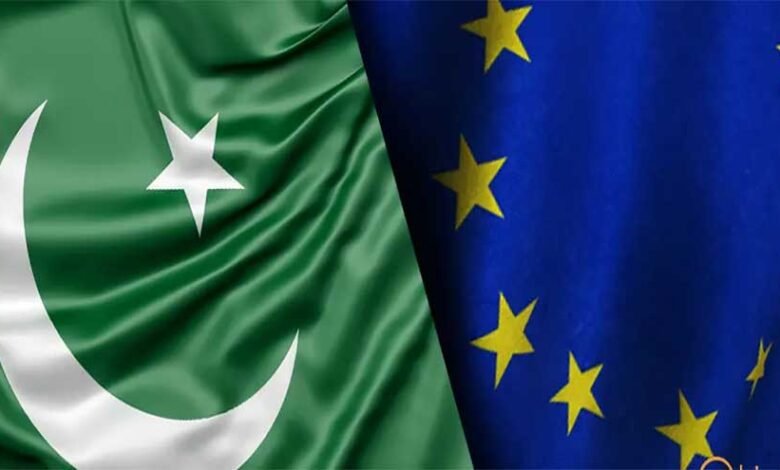
Haroon Akhtar Khan, Special Assistant to the Prime Minister on Industries and Production, stated on Tuesday that Pakistan and the European Union are embarking on a revitalised partnership centred on investment, innovation, and sustainable growth, as the nation fortifies reforms and elevates its global economic position.
During the inaugural session of the EU–Pakistan Business Forum, he stated, “This is not merely another conference, but a pivotal moment to shape the future of Pakistan–EU cooperation.” He remarked that the robust participation signifies increasing foreign trust in Pakistan’s economic trajectory.
The SAPM commended the prime minister’s leadership, noting that his administration has effectively stabilised the economy, reinstated investor confidence, and bolstered Pakistan’s worldwide credibility through consistent and resolute measures.
He underscored Pakistan’s dedication to regional peace and stability, asserting that the nation persistently advocates for discussion and collaboration, thereby affirming its position as a responsible and progressive entity.
Haroon emphasised that the European Union is Pakistan’s foremost export destination, with the GSP Plus framework being crucial in enhancing market access and elevating standards.
He emphasised that the future of this alliance extends beyond commerce, concentrating on investment, technological collaboration, and integration into global value chains.
“Pakistan is prepared to ascend the value chain and establish itself as a reliable partner in global supply systems, spanning textiles, technology, manufacturing, and digital services,” he asserted.
He emphasised Pakistan’s economic potential, citing its population over 240 million, a burgeoning middle class, and its strategic position at the intersection of South Asia, Central Asia, and the Middle East, which offers access to a market of over 3 billion individuals.
The SAPM highlighted industrial revival as a fundamental aspect of economic policy, stating that the government is enacting structural changes to improve productivity, competitiveness, and sustainable growth.
This encompasses enhanced financial accessibility, empowerment of SMEs, and policy initiatives aimed at decreasing business operational costs.
He stated that efforts like the National Tariff Policy and the Regulatory Guillotine are streamlining rules, minimising bureaucratic obstacles, and fostering a more predictable business climate. “Pakistan is dedicated to offering convenience, assurance, and scalability to investors,” he stated.
The SAPM emphasised the government’s commitment to sustainability via the New Energy Vehicle Policy and comprehensive environmental measures, integrating economic development with climate accountability.