Trump to ask Congress to approve Saudi Arabia nuclear energy accord
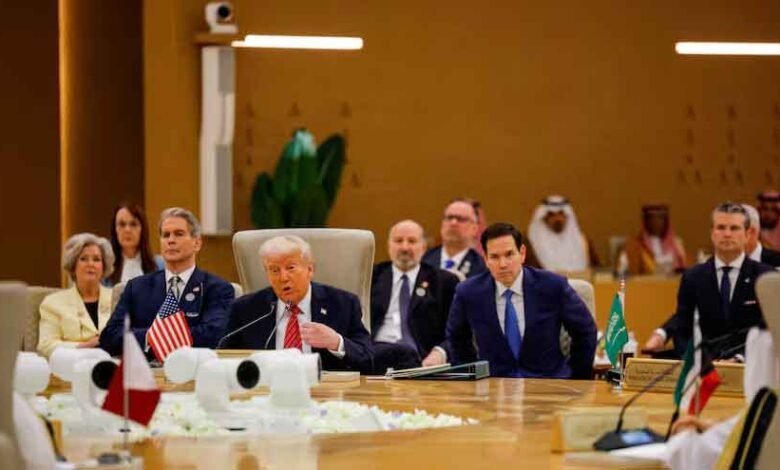
The Trump administration wants to propose to Congress a contract with Saudi Arabia to share nuclear power technology that does not include protections the United States has long said would avoid materials being used in nuclear weapons projects, two sources told Reuters.
The administration will send to Congress within days a document known as a 123 Agreement to be signed by U.S. Energy Secretary Chris Wright and Saudi energy minister Abdulaziz bin Salman, the sources said.
The two reached a preliminary deal in Riyadh last year.
The White House and the U.S. Department of Energy did not immediately respond to requests for comment.
The deal cites Section 123 of the U.S. Atomic Energy Act of 1954 and is needed to allow the U.S. government and American firms to engage with businesses in the kingdom to build a multibillion-dollar civil nuclear industry.
Sources familiar with the deal say it does not include the “Gold Standard” that would prevent the monarchy from enriching uranium and reprocessing used nuclear fuel, both potential avenues to nuclear weapons.
The sources, who spoke on condition of anonymity to discuss sensitive issues, said the deal also excludes the “Additional Protocol” which gives the U.N.’s International Atomic Energy Agency wide and more intrusive oversight of a country’s nuclear activities, including the power to conduct snap inspections at undeclared sites.
The administration would submit the agreement as soon as Wednesday, one of the individuals said. The other suggested the agreement will be submitted in a week or so. One of them, who did not say whether the agreement was without safeguards, said it would be presented shortly.
Wright had stated the preliminary deal was not about enrichment, and it included all the nonproliferation provisions in the Atomic Energy Act, which are among the highest in the world.
The agreement would create a legal framework for working together on the nuclear fuel cycle, including uranium enrichment, without the need for the United States to share any of its related capabilities or technology with Saudi Arabia, according to one of the sources.
FEARS OF PROLIFERATION
Saudi Arabia’s Crown Prince Mohammed bin Salman stated long before Iran’s announcement Saudi Arabia would create a nuclear weapon if Iran did, raising concerns among arms control activists and some U.S. politicians about a civil nuclear deal.
Saudi Arabia doesn’t intend to acquire any nuclear bomb but without a doubt if Iran created a nuclear bomb, we will follow suit as quickly as possible,” the crown prince told CBS in 2018.
The kingdom has also said it wants to keep the right to enrich uranium.
The United Arab Emirates signed a 123 Agreement in 2009 with Washington and agreed to the “Gold Standard.”
When 123 agreements are sent to Congress, they go through a review period of roughly 90 days of consecutive congressional sessions for lawmakers to object, or they become effective.
Congress would have to pass a joint resolution and have a two-thirds majority to override any presidential veto to block the agreement.
Many Democrats and some Republicans, including President Donald Trump’s Secretary of State Marco Rubio when he was in the Senate, have insisted any deal contain guardrails.