Ministers: fuel subsidies to limit the increase in the price of necessities
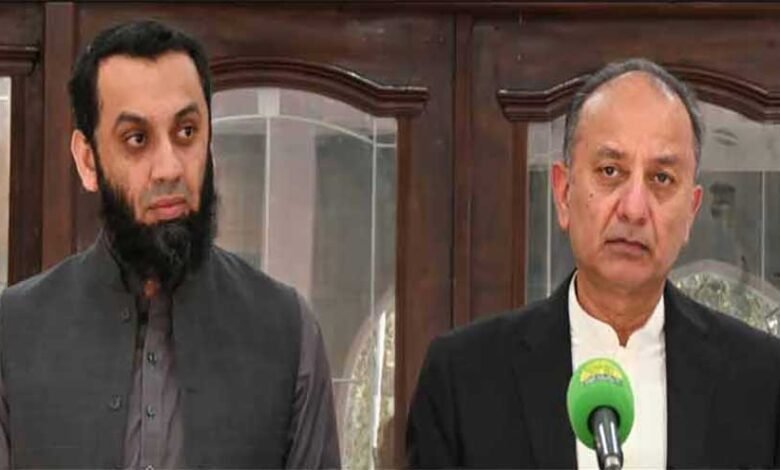
Federal Ministers of Climate Change and Information and Broadcasting, Attaullah Tarar Dr. Musadik Malik stated on Saturday that by taking prompt and decisive action, the government was able to protect the people from fuel shortages and lessen the effects of the world oil crisis.
Speaking together here, they noted that the government took decisive action to shield citizens from the harshest consequences of rising oil prices and guaranteed a steady supply of fuel despite serious international obstacles.
They claimed that in order to keep the price of necessities like fruits, vegetables, wheat, and rice from rising sharply, subsidies were given for trucks, buses, motorcycles, and other forms of transportation.
They admitted that despite these efforts, the effects of inflation and rising fuel prices are still felt by regular people. They stated, “With a heavy heart, we reiterate that while the government is doing everything possible, the impact is still being felt by ordinary citizens.”
They stressed that safeguarding the savings and dignity of all citizens, particularly the most vulnerable, continues to be the government’s top concern and that every effort is being made to alleviate financial strain.
Climate Change Minister at the Federal Level Dr. Musadik Malik emphasised that about Rs. 129 billion, which came from savings and development funds rather than carelessness, was used to stabilise fuel prices.
He clarified that the government’s austerity measures included a 50% reduction in fuel use, the closure of 60% of official vehicles, salary reductions for ministers, and a reduction in development spending.
He claimed that in order to safeguard farmers, workers, students, and users of public transit, Prime Minister Shehbaz Sharif deliberately chose to pass on the higher price of oil solely to those who could afford it.
To keep the price of necessities like fruits, vegetables, wheat, and rice from rising sharply, subsidies were given for trucks, buses, motorcycles, and other modes of transportation.
Dr. Malik went on to say that recent actions, such as lowering the petroleum duty by Rs. 80, reduced the price of gasoline from Rs. 458 to Rs. 378 per litre. With extra subsidies, motorcyclists now pay an effective price of Rs. 278 per litre.
He stated that despite encouraging residents to use less gasoline and energy, the government keeps up its worldwide diplomatic efforts.