The government’s FY2026–2027 budget calls for tax reforms and spending reductions.
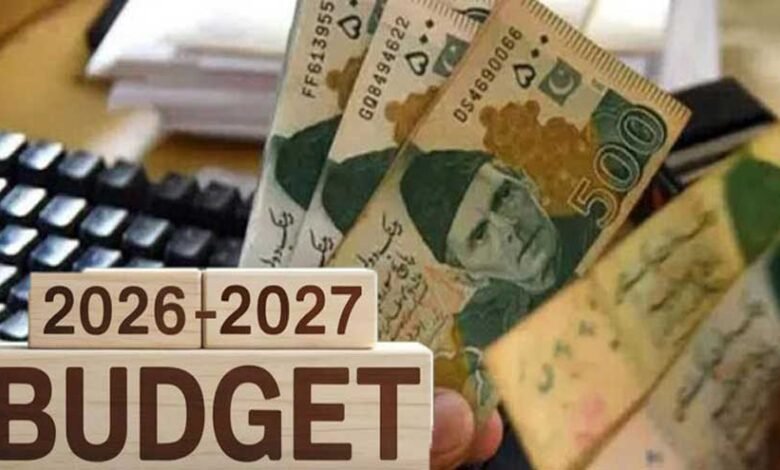
According to sources in the Ministry of Finance, the administration plans to implement stringent fiscal measures in the upcoming federal budget for FY2026–2027, with a heavy emphasis on reducing public spending and enhancing revenue collection.
Key recommendations, according to officials, include lowering sales tax exemptions, increasing the tax base, and eliminating non-essential spending in order to improve fiscal restraint. As the government seeks to increase the tax-to-GDP ratio and bring the public debt closer to 70% of GDP in accordance with consultations with the International Monetary Fund, the Federal Board of Revenue (FBR) is anticipated to set a tax collection target of roughly Rs15.5 trillion.
In order to prevent further fiscal strain, authorities further emphasized the necessity of prompt fuel price adjustments, especially in light of regional tensions impacting international energy markets. Based on ongoing reforms and stable international conditions, the IMF has estimated Pakistan’s medium-term growth to be about 5.5%.
Despite comparatively stable core inflation, rising energy and food prices are predicted to push overall inflation above objectives, raising concerns about inflation. Economic indicators for FY2025–2026 show mixed results, with robust development in industries like textiles, automobiles, and construction, but rising dangers from rising global oil prices associated with tensions in the Middle East.
For the current fiscal year, the government has set a primary surplus target of 1.6 percent of GDP. Higher petroleum levy collections, better provincial income, and spending reductions helped to partially offset the FBR’s revenue shortfall even though it fell short of its projections. It is anticipated that additional actions, such as collecting unpaid taxes after court decisions, will bring in about Rs322 billion.
Reducing subsidies, improving governmental financial efficiency, and cutting back on discretionary spending are among measures being considered. Although they have been used to reduce public pressure, temporary relief methods like postponing gasoline price hikes are not thought to be sustainable.
Officials cautioned that there are still difficulties due to external threats, such as geopolitical tensions, uncertainties in the world economy, and possible disruptions in the supply of oil. In addition to better cooperation with provincial governments, the government believes that structural reforms, tax system enhancements, and a more business-friendly climate will be necessary for sustainable growth.
It is anticipated that the next budget would combine required fiscal discipline with reform-driven policies to strike a balance between growth and economic stability.