Iran’s response to the US peace offering is deemed “unacceptable” by Trump.
The 10-week confrontation, which has caused extensive damage in Iran and Lebanon, halted maritime trade in the Strait of Hormuz, and increased global oil costs, is expected to end soon after President Donald Trump rejected Iran’s answer to a US request for peace negotiations on Sunday.
Iran released a statement on Sunday that focused on ending the conflict on all fronts, including Lebanon, and on the safety of shipping through the blockaded Strait of Hormuz, according to Iranian state TV, days after the US made an offer in the hopes of resuming talks.
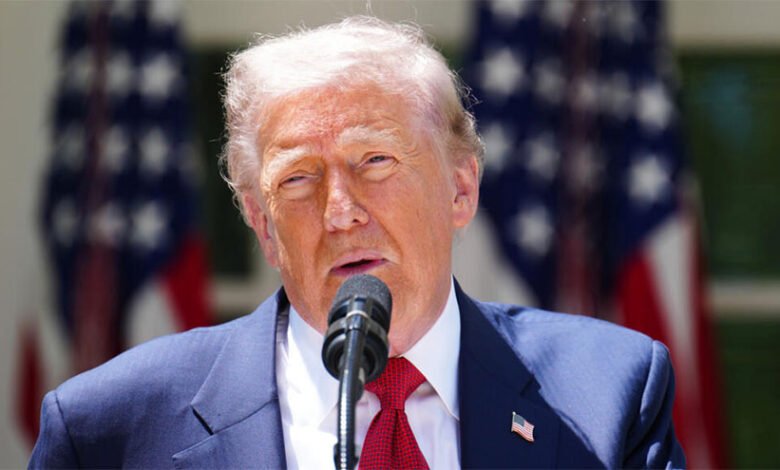
Trump disregarded the Iranian offering in a social media post just hours after it was made public.I recently read Iran’s purported “Representatives” answer. Without providing any information, Trump wrote on Truth Social, “I don’t like it—totally unacceptable.”
After the US and Iran were unable to come to an agreement, oil prices increased by US$3 per barrel.
According to official media, Iran’s plan emphasizes Iranian sovereignty over the strait and demands reimbursement for war damages.
According to the semi-official Tasnim news agency, it also demands that the US lift sanctions, halt its naval blockade, ensure that there are no more attacks, and lift its restriction on Iranian oil shipments.
Before beginning negotiations on more divisive topics, such as Iran’s nuclear program, the US had suggested ending hostilities.
Iran suggested diluting part of its highly enriched uranium and sending the rest to a third nation, according to unidentified sources cited by the Wall Street Journal.
According to a Pakistani official, Pakistan, which has been mediating the conflict, sent the US the Iranian response.
Hostile drones were spotted above numerous Gulf nations on Sunday, highlighting the threat still present in the area despite a month-old ceasefire in the fight and around 48 hours of relative calm.
However, according to data from marine analytics company Kpler, the QatarEnergy-operated carrier Al Kharaitiyat crossed the strait without incident and was en route to Pakistan’s Port Qasim. Since the US and Israel began the conflict on February 28, this was the first ship from Qatar to transit the strait carrying liquefied natural gas.
According to sources, Iran authorized the transfer, which provided Pakistan with some relief following a series of power outages brought on by a halt to gas imports, in order to foster trust between Pakistan and Qatar, another mediator.
Additionally, according to Tasnim on Sunday, a Panamanian-flagged bulk ship headed for Brazil that had earlier tried to cross the strait on May 4 did so using a route approved by Iran’s military.
Prior to his visit to China, Trump is under pressure to end the war.
There has been increasing pressure to draw a line under the war, which has sparked a worldwide energy crisis and poses an increasing threat to the global economy, as Trump is scheduled to visit China this week.
The tiny Strait of Hormuz, which previously carried one-fifth of the world’s oil supply, has become one of the main areas of pressure in the conflict because Tehran has largely prohibited non-Iranian shipping through it.
In comments broadcast on Sunday, Trump stated, “They are defeated, but that doesn’t mean they’re done,” when asked if combat operations against Iran had ended.
According to Israeli Prime Minister Benjamin Netanyahu, there is “more work to be done” to remove enriched uranium from Iran, demolish enrichment facilities, and deal with Iran’s ballistic missile capabilities and proxies.
In an interview with CBS News’ 60 Minutes, Netanyahu stated that negotiation would be the most effective approach to remove the enriched uranium, however he did not rule out using force.
Iran will “never bow down to the enemy” and “defend national interests with strength,” according to a social media post made by President Masoud Pezeshkian.
The threat to the region’s businesses and shipping waterways persisted despite diplomatic attempts to end a deadlock.
Qatar denounced a drone attack that struck a cargo ship from Abu Dhabi in its waters on Sunday, while the United Arab Emirates claimed to have intercepted two drones from Iran. Kuwait claimed that hostile drones that had infiltrated its airspace had been neutralized by its air defenses.
The UAE was attacked again on Friday, and there have been reports of intermittent battles between Iranian forces and US vessels in the strait. These are the worst flare-ups in fighting in and around the strait since a ceasefire started.
Despite an announcement on April 16 of a ceasefire mediated by the United States, fighting has also persisted in southern Lebanon between Israel and the militant organization Hezbollah, which is supported by Iran.
Hezbollah opened fire on March 2 in response to a US-Israeli attack on Tehran, rekindling hostilities between Israel and the Lebanese organization. On May 14, the most recent negotiations between Israel and Lebanon are scheduled to begin in Washington.
IRANIAN WARNING DRAW FOR INTERNATIONAL MISSION PREPARATIONS
The war is unpopular, according to surveys, and less than six months before the midterm elections, US voters are dealing with much increased petrol costs.
NATO partners have refused to send ships to open the Strait of Hormuz without a complete peace agreement and an officially mandated mission, demonstrating the lack of support the US has received from other countries.
At home, Trump has had to thwart attempts by Democrats in Congress to use the War Powers Act to compel an end to the conflict.The senior Democrat on the Senate Armed Services Committee, US Senator Jack Reed, said on Fox News’ Sunday Morning Futures program, “Donald Trump’s actions have made this situation much worse, and now he’s floundering around trying to figure out a way to get out of it.”