Minister calls for sensible taxation to boost rural economy in Pakistan
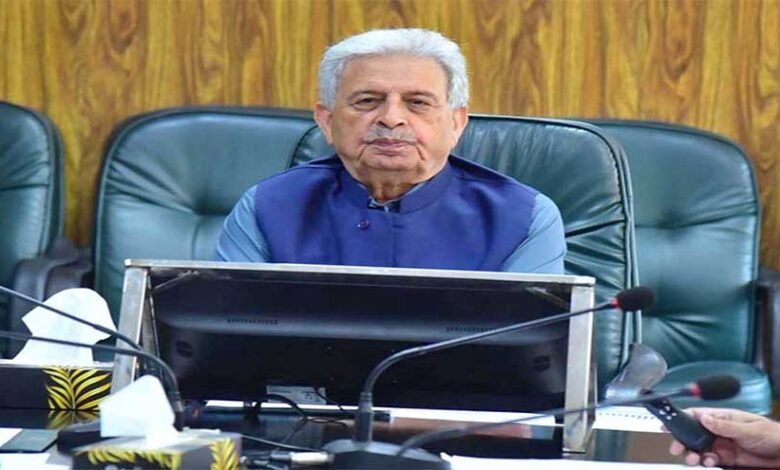
Rana Tanveer Hussain, the Minister for National Food Security and Research, stated on Tuesday that Pakistan required intelligent taxes in order to encourage innovation, rural economy, and nutrition.
The minister was speaking at a high-level consultation that was organised by the Sustainable Development Policy Institute (SDPI). The purpose of the consultation was to discuss the rationalisation of the Federal Excise Duty (FED) on beverages and juice products in Pakistan. The consultation was attended by key stakeholders from the government, academia, industry, and development partners.
The economic, nutritional, industrial, and agricultural aspects of the current tax structure were the primary topics of debate, as were the broader implications that this structure has for the food and beverage industry in the country.
The minister emphasised that taxation is not only a fiscal instrument but also a policy tool that impacts consumer patterns, public health outcomes, and industrial growth. He said this in a statement.
He made the observation that the existing universal FED regime does not effectively reflect the major disparities in sugar content, nutritional value, and economic benefit across the many categories of beverages. As a result, he advocates for a taxation strategy that is more nuanced and evidence-based.
In his speech, Rana Tanveer Hussain emphasised that Pakistan’s policy framework needs to carefully balance several objectives. These objectives include the protection of public health, the sustainability of domestic agriculture, the competitiveness of industry, and the stability of government revenues.
He pointed out that these objectives are not in conflict with one another and that they can be achieved simultaneously through the establishment of policies that are calibrated and sensible.
The minister emphasised the connection between the beverage industry and agriculture, pointing out that the formal juice industry plays a significant role in the strengthening of agro-based value chains. This is accomplished by the industry’s acquisition of substantial quantities of locally produced fruits, which in turn creates opportunities for income for farmers, transporters, processors, packaging suppliers, and rural workers.
Specifically, he emphasised the significance of maintaining policy stability in this sector in order to foster investment, value creation, and sustained economic expansion.
During the same time, he brought attention to the rising problem of undocumented and unregulated markets, and he cautioned that undue pressure on documented sectors can unintentionally drive consumers towards alternatives that are cheaper and of lesser quality.
According to him, such transitions give rise to significant concerns surrounding food safety, consumer protection, and revenue leakage, and as a result, they necessitate careful policy calibration.
Additionally, the minister brought attention to the worldwide movement towards differentiated pricing based on sugar content and nutritional composition. He stated that Pakistan ought to proceed in a similar direction by supporting healthier product formulations and innovation within the business.