PM emphasizes how important the railway system is to boosting the economy.
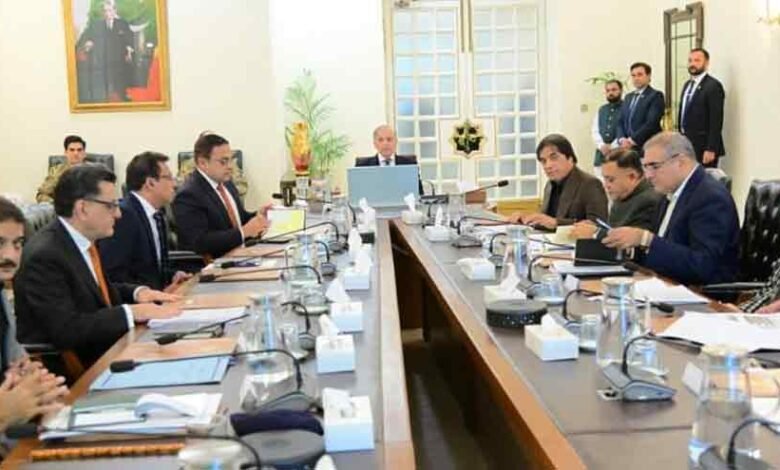
On Saturday, Prime Minister Shehbaz Sharif stated that the railway network is the foundation of any nation’s economy and communication system.
The prime minister ordered the hiring of international legal and economic experts, especially for projects pertaining to regional connectivity and international train lines, while presiding over a significant discussion on Pakistan Railways-related issues at the PM’s House.
He also emphasized that issues pertaining to railway property and land should be handled using a public-private cooperation paradigm.
The prime minister also praised Minister for Railways Hanif Abbasi and his staff for their efforts to revitalize and upgrade Pakistan Railways, and he expressed gratitude for the actions done to restore the train system.
According to a news statement from the PM Office Media Wing, prominent government officials, including Minister of Railways Hanif Abbasi and Minister of Economic Affairs Ahad Khan Cheema, attended the meeting.
A thorough report on the steps being taken to enhance Pakistan Railways was delivered to the conference.
It was reported that 56 trains had been moved on the seven digital portals under the “Rabta” project, and that 54 railway stations had been digitalized as part of the effort to digitize Pakistan Railways.
The attendees were told that the railway stations in Karachi, Lahore, Rawalpindi, and Faisalabad already had free wi-fi, and that by December 31 of this year, another 48 stations would also have free wi-fi.
The introduction of an online freight booking system was also disclosed. At Karachi City Railway Station, a digital weighing bridge pilot project was started. In the following stage, the facility would be expanded to Pipri, Karachi Cantonment, Port Qasim, Lahore, and Rawalpindi stations.
There are 148 AI-powered security cameras at the Rawalpindi train station. At the train stations, ATMs from different banks were being installed.
In addition to the establishment of first-rate passenger waiting areas at key train stations, outsourcing was done to raise standards of cleanliness.
The meeting was informed that, for the convenience of the passengers, information desks had also been put up at the train stations.
Relevant food authorities from each of the four provinces were granted access and supervision in order to enhance the quality of food and drinks served at train stops.
Four trains had already been outsourced, and an advertising was presented for the outsourcing of eleven more trains in the near future, which was anticipated to bring in an extra Rs8.5 billion.
Additionally, 40 luggage and brake vans were outsourced, which was anticipated to generate an extra 820 billion rupees in revenue.
Two cargo express trains were also being outsourced, which was anticipated to bring in an extra Rs6.3 billion.
The committee was informed that railway hospitals in Lahore, Karachi, Multan, Peshawar, Quetta, and Sukkur were being outsourced, and that railway schools, colleges, and rest homes were also still being outsourced. Additionally, the dry ports in Azakhail, Islamabad, and Lahore were being outsourced.
155 train stations in all had switched to solar power.
The closure of Pakistan Railway Advisory & Consultancy Services, Pakistan Railway Freight Transportation Company, and Railway Constructions Pakistan Limited was reported.
An upgrade plan for Main Lines 1-K and 3 was being developed for the Karachi–Kotri segment.
The gathering was informed that the Islamabad-Tehran-Istanbul train will shortly start operations and that work on the Thar Rail Connectivity project would be carried out in collaboration with the Sindh government. The railroad project between Kazakhstan, Uzbekistan, Afghanistan, and Pakistan was also in preliminary stages.