Minister for structural measures to enhance the dairy sector
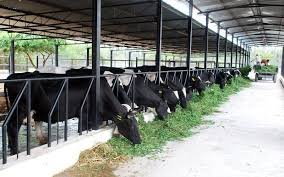
The Federal Minister for National Food Security and Research, Rana Tanveer Hussain, emphasised the necessity of tax rationalisation and structural reforms in the dairy sector to enhance affordability, provide safe nutrition, and assist farmers in the nation.
He addressed a pre-budget consultation co-hosted by the Sustainable Development Policy Institute (SDPI) and the Pakistan Dairy Association, according to a news statement released on Sunday. The minister stated that livestock constitutes approximately 60 percent of the agricultural industry and possesses considerable potential for both domestic nutrition and exports.
He recognised that taxation measures, especially the sales tax on dairy products, had impacted output and growth. He proposed that the relaxation of the tax structure may enhance both productivity and income.
Rana Tanveer observed that decreasing the General Sales Tax (GST) on milk is feasible; therefore, initiatives such as pilot projects for pasteurisation and the creation of “safe milk cities” are being contemplated. He stated that enhancing milk quality and formalising the business would be essential priority moving forward.
During his introductory remarks, SDPI Executive Director Dr. Abid Qaiyum Suleri proposed various taxing scenarios and advocated for the inclusion of processed milk in a third schedule. He cautioned that rural milk collecting centers were closing, as the pricing of processed milk adversely affects loose milk markets.
Usman Zaheer Ahmad, Chairman of the Pakistan Dairy Association, emphasised that 40 percent of children in Pakistan experience stunting due to malnutrition, despite milk being the most prevalent source of animal protein.
He stated that the sector is 98 percent informal, with restricted quality controls. He warned that 18 percent GST in 2024 caused 27 per cent decline in formal dairy sector.
He suggested lowering GST to 10 percent and incorporating a portion of the informal economy into the tax system, potentially generating up to Rs 250 billion in income.
Zainab Naeem, Head of the Ecological Sustainability and Circular Economy Unit at SDPI, stated that the consultation sought to unite government, the commercial sector, and civil society to tackle food insecurity and connect the dairy sector with nutrition.
She asserted that milk had to be regarded as an essential nutritional requirement rather than a luxury commodity. She advocated for methods to improve affordability and accessibility for low- and middle-income households.