Trump states that the US will ‘assist’ stranded vessels in the Strait of Hormuz.
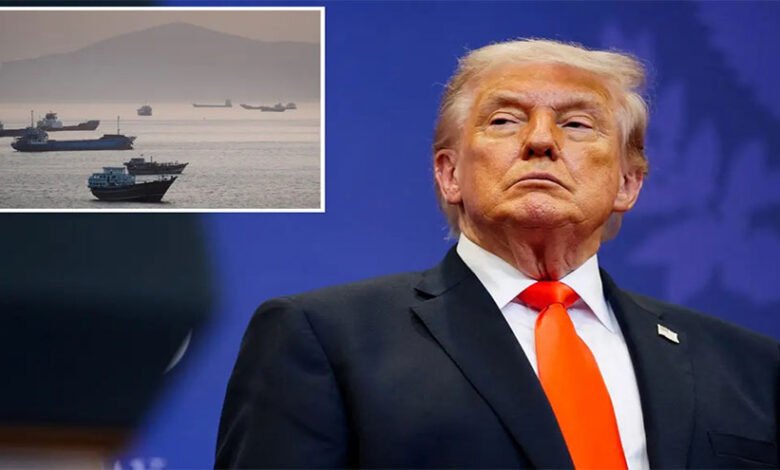
On Monday, the United States will initiate an operation to “guide” trapped vessels from the Iran-affected Strait of Hormuz, as said by President Donald Trump, who provided few details regarding a comprehensive initiative to assist numerous ships and around 20,000 mariners.
In a social media statement on Sunday, Trump stated that “neutral and innocent” nations had been impacted by the Iran conflict, asserting, “we have informed these countries that we will safely guide their ships out of these restricted waterways, enabling them to conduct their business freely and effectively.”
Trump announced that “Project Freedom” will commence on Monday morning in the Middle East, stating that his representatives are engaged in conversations with Iran that may result in a “very positive outcome for all.”
The effective blockade of the strait by Iran, enacted following the commencement of hostilities by the U.S. and Israel on February 28, has destabilised world markets.
Vessels and mariners, predominantly aboard oil and gas tankers and cargo ships, have been immobilised in the Persian Gulf since the onset of the conflict. Crew members reported to The Associated Press observing intercepted drones and missiles detonate over the waterways, while experiencing shortages of potable water, food, and other provisions.
A significant number of sailors originate from India and several nations in South and Southeast Asia.
Trump stated, “They are victims of circumstance,” characterising the initiative as a humanitarian endeavour “on behalf of the United States, Middle Eastern countries, and specifically, the country of Iran.” However, he issued a caution: “Any interference with this humanitarian process will, regrettably, necessitate a forceful response.”
Trump’s declaration was promptly disseminated by certain Iranian media, who characterised his remark as a “claim.”
Trump addressed the situation shortly after Iran announced it was evaluating the U.S. reaction to its most recent proposal for concluding the conflict, emphasising that these discussions do not pertain to nuclear negotiations. The tenuous three-week ceasefire seems to be maintained.
A cargo vessel is assaulted near the strait.
On Sunday, a cargo ship near the Strait of Hormuz reported an attack by several small vessels, according to the United Kingdom Maritime Trade Operations center of the British military. This incident marked the most recent of at least two dozen assaults in and around the strait since the onset of the Iran war.
The British monitor reported that all crew members on the unidentified northbound cargo ship were safe following the incident at Sirik, Iran, east of the strait. Iranian officials have claimed authority over the strait, stating that vessels not associated with the United States or Israel may transit upon payment of a toll, so contesting the freedom of navigation enshrined in international law.
Iran refuted allegations of an attack, as reported by the semiofficial Iranian outlets Fars and Tabnak, and stated that a passing vessel had been halted for a documentation inspection as part of monitoring procedures.
The report indicated that it was the inaugural documented assault in the region since April 22. Tehran has effectively obstructed the strait by assaulting and menacing vessels, and the threat level in the region remains severe.
Iranian patrol vessels, some solely equipped with twin outboard motors, are compact, agile, and difficult to detect. Last month, Trump commanded the U.S. military to “shoot and kill” tiny Iranian vessels that lay mines in the strait.
The British military monitor reported on Sunday that vessels near Ras al-Khaimah, the northernmost emirate of the United Arab Emirates and in proximity to the strait, have received radio warnings to vacate their anchorages. The sender of the VHF transmissions was ambiguous.
Iran evaluates the United States’ reaction to its most recent proposal.
The Iranian judiciary’s Mizan news agency reported Foreign Ministry spokesman Esmail Baghaei said that Tehran is evaluating the U.S. response to its recent request to conclude the conflict.
However, “at this juncture, we have no nuclear discussions,” stated Baghaei. The nuclear program of Iran and its enriched uranium have historically been the focal point of tensions with the United States; nevertheless, Tehran prefers to postpone discussions on this matter.
Iran’s plan seeks resolution of other concerns within 30 days and hopes to conclude the war rather than prolong the ceasefire, as reported by state-affiliated media.
On Saturday, Trump stated that he was evaluating the plan but expressed scepticism on its potential to result in an agreement.
Iran’s 14-point proposal demands the United States lift sanctions on Iran, terminate the naval blockade of Iranian ports, withdraw forces from the region, and halt all hostilities, including Israel’s actions in Lebanon, as reported by the semiofficial Nour News and Tasnim agencies, which are closely affiliated with Iran’s security organisations.
The Prime Minister, Foreign Minister, and Army Chief of Pakistan persist in urging the United States and Iran to engage in direct dialogue, as reported by two anonymous officials in Pakistan who were not permitted to address the media.
Iran maintains a resolute position over the Strait of Hormuz.
Trump has proposed a strategy to reopen the Strait of Hormuz, located at the entrance of the Persian Gulf, through which approximately one-fifth of global oil and natural gas traffic, as well as essential fertilisers for farmers worldwide, transits.
Tehran “will not relent in its stance regarding the Strait of Hormuz, and it will not revert to its prewar status,” stated Iran’s deputy parliament speaker, Ali Nikzad, on Sunday.
The United States has cautioned shipping companies that they may encounter sanctions for remitting payments to Iran in any manner, including digital assets, for safe passage across the strait.
Simultaneously, the U.S. naval blockade instituted on April 13 is stripping Tehran of essential oil revenue required to stabilise its faltering economy. On Sunday, the U.S. Central Command announced that 49 commercial vessels have been instructed to reverse course.
U.S. Treasury Secretary Scott Bessent stated on Fox News Sunday that they had received less than $1.3 million in tolls, which is a trifling amount compared to their prior daily oil revenues. He stated that Iran’s oil storage is quickly reaching capacity and that “they will need to commence shutting in wells, which we anticipate could occur within the next week.”