The president reiterates Iqbal’s contributions to national life.
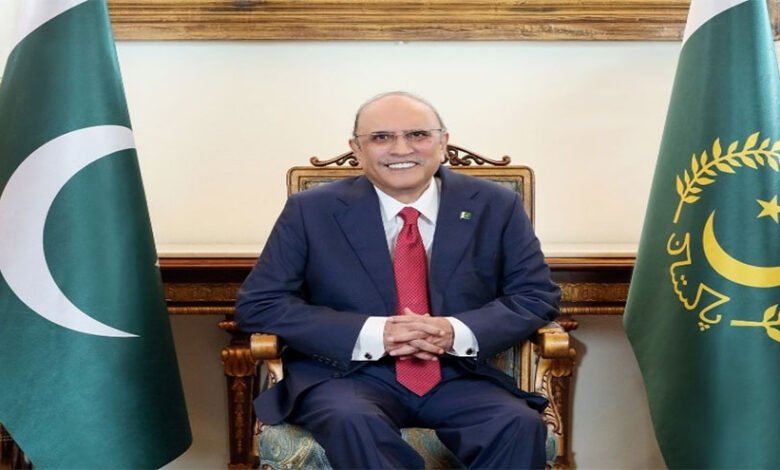
President Asif Ali Zardari reiterated the significance of incorporating Iqbal’s principles into public behavior and national life, stating that the real worth of his ideas is found in their application in creating a society that is just and balanced.
He wrote, “Today, we pay tribute to Allama Muhammad Iqbal, the Poet of the East, a profound Muslim thinker and the visionary who gave intellectual direction to the idea of Pakistan,” on April 21, 2026, Iqbal Day. In addition to being a brilliant poet, he was a moral, intellectual, and spiritual leader who led the Muslim Ummah toward self-awareness, intellectual independence, self-respect, and unwavering endeavor. He revived people’s faith in action and possibility at a period of decline and uncertainty.
“Iqbal’s ideas demonstrate a thorough understanding of both Eastern and Western customs. He presented a forward-thinking vision of society based on justice, dignity, and human potential by drawing on this extensive intellectual legacy. He continued, “His work also discusses the rise of Asia and the reawakening of societies that had long been under external dominance, offering a perspective that continues to resonate in the current century.”
“A clear concern for fairness in economic and social life was at the heart of Iqbal’s message,” the President stated. He emphasized that the dignity of work must be matched by equity in the workers’ outcomes and questioned systems that deny laborers their fair share. His focus on social and economic justice is still important for creating a stable, just, and compassionate society.
“Serious issues characterized by conflict and division still confront the modern world. Allama Iqbal’s ideas are still a living source of wisdom in these situations. He advocated for justice over oppression, compassion over hatred, and hope over despair. He went on, “In his opinion, long-term peace depends not only on political arrangements but also on individual reform and the development of moral character.”
He cited passages from Allama Iqbal that read, “Adamiyyat ehtiram-e-adami, Bakhabar sho az maqam-e-adami. (Humanity lies in respecting the dignity of man; recognize the true station of man).”
The applicability of Iqbal’s ideas to all facets of society is a significant feature. He urged young people to have ambition and work hard. He emphasized that women should play an active and respectable part in society. He made the connection between information, character, and purpose for students. He emphasized integrity and independence for common people. “The development of Khudi, a strong sense of self that enables people to act with confidence and responsibility, is at the center of his message,” he said.
“Allama Iqbal saw education as a means of intellectual and moral formation, not just a path to livelihood,” the President stated. His focus on morality, accountability, and meaningful education is still directly applicable to how we design our educational and social structures. Character must be developed by knowledge, responsibility must be brought about by awareness, and talents must benefit society. Building a stable, independent, and forward-thinking Pakistan requires this strategy.
Beyond Pakistan, Iqbal’s intellectual prominence is acknowledged. His poetry is highly respected in Iran, a country with a strong Persian literary heritage. This illustrates the breadth and depth of his ideas, which cut across societies and cultures, he said.
“Jahan-e tazah ki afkar-e tazah se hai numood, Ke sang o khisht se hote nahin jahan paida,” he said in a different couplet. (Worlds are not made of stone and brick alone; new ways of thinking give rise to new worlds.)